Registrado: 05 Oct 2005 20:42
Mensajes: 3034
|
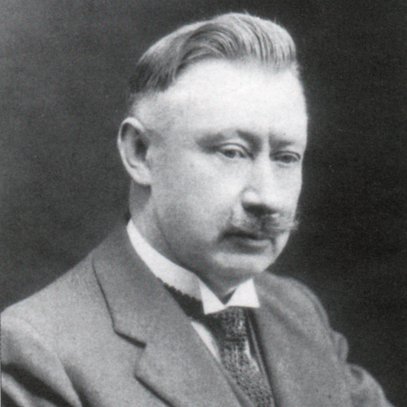
 Lyubomir Panayotov Pipkov [1904-1974] He was born in Lovech. Pipkov studied at the Sofia State Music Academy, graduating in 1926, and then in Paris at the Ecole Normale [1926–1932] under Dukas [composition], Léfébure [piano] and Boulanger [music history]. After graduating he returned to Sofia and worked at the National Opera, first as répétiteur, then as chorus master and finally as director [1944–1947]. In 1948 he was appointed professor of vocal ensemble and opera at the Sofia State Academy. He co-founded the society Contemporary Music in 1933, was founder of its successor, the Union of Bulgarian Composers, and from 1945 to 1952 he served as secretary of the Bulgarian Choral Union. He was director of the festival March Musical Days in Russe, and of Lilac Musical Days in Lovech. From the mid-1960s he was a member of the ISME. Lyubomir Panayotov Pipkov [1904-1974] He was born in Lovech. Pipkov studied at the Sofia State Music Academy, graduating in 1926, and then in Paris at the Ecole Normale [1926–1932] under Dukas [composition], Léfébure [piano] and Boulanger [music history]. After graduating he returned to Sofia and worked at the National Opera, first as répétiteur, then as chorus master and finally as director [1944–1947]. In 1948 he was appointed professor of vocal ensemble and opera at the Sofia State Academy. He co-founded the society Contemporary Music in 1933, was founder of its successor, the Union of Bulgarian Composers, and from 1945 to 1952 he served as secretary of the Bulgarian Choral Union. He was director of the festival March Musical Days in Russe, and of Lilac Musical Days in Lovech. From the mid-1960s he was a member of the ISME.
The author of celebrated works of the 1920s and 30s, Pipkov was one of the most important representatives of the second generation of Bulgarian composers; as such he was a founder of a national style. His musical language evolved naturally through successive stages. In the early 1920s he made his début with chamber pieces in the style of Chopin, Schumann, Debussy and Ravel, while in the First String Quartet [1928, the first also in Bulgaria], having mastered the principles and forms of the European tradition, he moved to embrace Bulgarian folk music. During the remaining Paris years he took on board new genres while endorsing a typically Bulgarian epic sense of drama, an example being Yaninite devet bratya [‘Jana's Nine Brothers’, 1929–1932], a work that was in effect the first Bulgarian classical opera. Upon his return to Sofia, Pipkov quickly established himself as a writer, critic [his article ‘Za Balgarskiyat muzikalen stil’ was something of a manifesto for the society Contemporary Music] and conductor, as well as composer. His vocal-orchestral Svadba [‘Wedding’], completed in 1935, marks the beginning of the cantata in Bulgarian music, while the equally innovative First Symphony served to summarize the achievements of his first period.
The second phase in his output spans the 1940s and the first half of the 50s. His epic dramatic style is developed and perfected, particularly in the opera Momchil [1939–1943], and in Symphony No. 2 this gives rise to his most accomplished orchestral writing yet. At this juncture in his career Pipkov extended his teaching activities and assumed a higher public profile, and as an adjudicator and representative of the Union of Bulgarian Composers he travelled extensively throughout Europe. In addition to their expressiveness and strong sense of drama, the works from the mid-1950s onwards convey the spirit of optimism. This is particularly true of Oratoriya za nasheto vreme [‘Oratorio for our Time’] and Priglusheni pesni [‘Muted Songs’]. The Fourth Symphony [1968–1970] is highly individual, while the piano piece Proletni priumitsi [‘Spring Caprices’, 1971–1972] revisits compositional ideas from earlier works. As a whole, the operas and orchestral works have qualities which are akin to the realism of Shostakovich, Bartók and Britten.
Grove
Yaninite devet bratya, ópera [1929–1932]. Final.
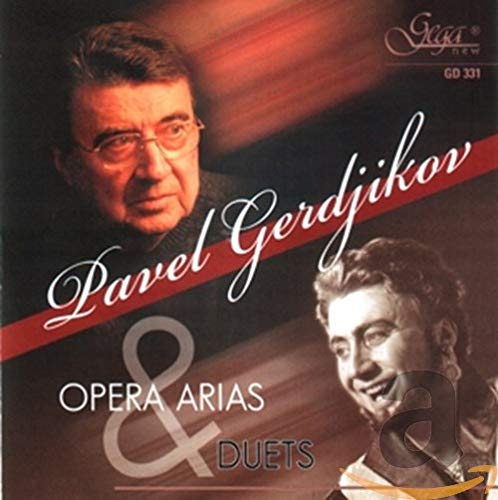
Momchil, ópera [1939–1943]. Escena II: Duet of Elena and Sabo.

Escena V: Vee buiniat, vechniat viata.

_________________
|
|

 Identificarse
 Registrarse
 Normas
 FAQ
FAQ Usuarios