Fecha actual 18 Ene 2026 9:23

Todos los horarios son UTC + 1 hora [ DST ]


Nuevo tema Responder al tema  [ 1589 mensajes ]  Ir a página Anterior  1 ... 99, 100, 101, 102, 103, 104, 105, 106  Siguiente
Autor Mensaje
 Asunto: Re: La otra ópera
NotaPublicado: 08 Nov 2024 13:19 
Desconectado
Div@
Div@
Avatar de Usuario

Registrado: 30 Dic 2005 13:54
Mensajes: 13758
Ubicación: Madrid
No conocía Pellegrino del nulla, y lo he escuchado ahora en Qobuz. No llega a 45 minutos, y se me han hecho cortos. :wink:


Arriba
 Perfil  
 
 Asunto: Re: La otra ópera
NotaPublicado: 15 Nov 2024 10:21 
Desconectado
Div@
Div@
Avatar de Usuario

Registrado: 05 Oct 2005 20:42
Mensajes: 2995
Imagen

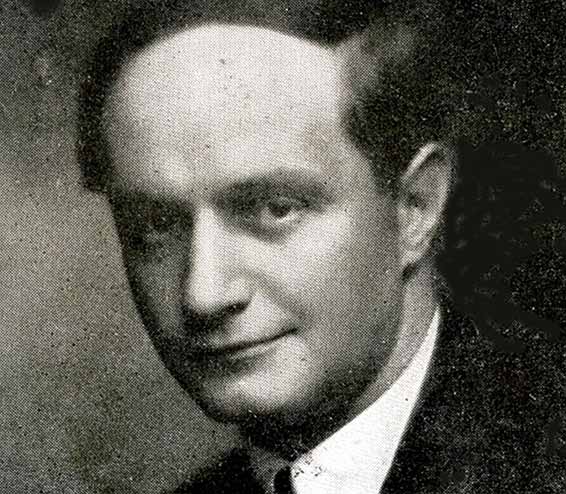
Paul Salerni [*1951] Salerni’s music pulses “with life, witty musical ideas and instrumental color (Philadelphia Inquirer)” and has been described by The New York Times as “impressive” and “playful.” Salerni’s song cycles and chamber music have been widely performed in Europe, China, the United States, and Canada, and he has had orchestral commissions from the San Diego Chamber Orchestra, the New Haven Symphony, the Cape Cod Symphony, and the Lehigh Valley Chamber Orchestra, among others. Salerni is the NEH Distinguished Chair in the Humanities at Lehigh, a winner of Lehigh’s highest acknowledgment of teaching excellence [the Stabler Prize], and the past Chair of the Suzuki Association of the Americas Board of Directors. An expert in the music of his teacher Earl Kim, he has presented Kim’s music as a lecturer, conductor, and pianist at the Kennedy Center, the Aspen Festival, the Dall’Abaco Conservatory in Verona, Italy, the Great Mountains Music Festival, and in radio and television broadcasts in Korea. He is currently writing a second one-act opera on a libretto by Kate Light. That new opera is an adaptation of a Dick Van Dyke TV Show episode written and produced by Carl Reiner.

Naxos

Tony Caruso’s Final Broadcast, opera in ten short scenes [2004]. Scene 6: The Past is Over.

Imagen

_________________
Imagen


Arriba
 Perfil  
 
 Asunto: Re: La otra ópera
NotaPublicado: 22 Nov 2024 12:20 
Desconectado
Div@
Div@
Avatar de Usuario

Registrado: 05 Oct 2005 20:42
Mensajes: 2995
Imagen

Franz Seydelmann [1748-1806] He was born in Dresden. As the son of Franciscus Seydelmann, a tenor in the electoral Kapelle in Dresden, he received an early and thorough musical education from the organist J.C. Weber and the composers J.G. Schürer and [from 1764] J.G. Naumann. He and his fellow pupil Joseph Schuster accompanied Naumann on a study tour of Italy from 1765 to 1768. He completed his education in Naples, Palermo, Bologna and Padua; he also sang with some success on the Italian stage. In 1772 he was appointed a church composer to the court in Dresden and in 1787 Kapellmeister, in both cases simultaneously with Schuster. Among his duties were the care of sacred music in the Catholic court church and the ‘Accompagnement der opera buffa’; occasionally the direction of the operas lay entirely in his hands because both Naumann and Schuster frequently took extended leave of absence. In 1773 Seydelmann’s earliest known stage work, La serva scaltra, was performed at the Kleines Kurfürstliches Theater in Dresden, followed by several other operas in succeeding years. His ‘Chinese’ spectacle Il mostro, ossia Da gratitudine amore [1786] was particularly successful, as was his best Italian opera, Il turco in Italia [1788], which Constanze Mozart described after a performance in Vienna in 1789. Although his operatic output virtually ceased in 1790 with Amore per oro, he wrote sacred music until the end of his life. Besides three oratorios he wrote many pieces to be used in Catholic services. He also composed secular solo cantatas, lieder, keyboard sonatas [including six for keyboard duet, 1781, ranked by Newman among the best of 18th-century examples of this genre] and chamber works.

Grove

Il Turco in Italia, dramma giocoso per musica en dos actos [1788]. Aria: Girate quel Guardo.

Imagen

_________________
Imagen


Arriba
 Perfil  
 
 Asunto: Re: La otra ópera
NotaPublicado: 29 Nov 2024 12:39 
Desconectado
Div@
Div@
Avatar de Usuario

Registrado: 05 Oct 2005 20:42
Mensajes: 2995
Imagen

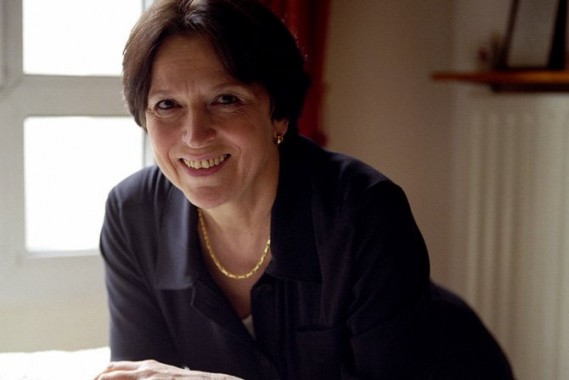
Edith Canat de Chizy [*1950] She was born in Lyon, and studied art, archeology and philosophy at the Sorbonne University in parallel with music at the Paris Conservatoire with Maurice Ohana - an important influence - and Ivo Malec. She continued her studies at the Paris Conservatoire, where she obtained first prizes in harmony, fugue, counterpoint, analysis, orchestration and composition. She also studied electroacoustics and worked with Guy Reibel at the Groupe de Recherches Musicales. Her instrument is the violin, and she has written extensively for string instruments. After completing her studies, Canat de Chizy worked as a music educator, becoming the director of the Erik Satie conservatory in the 7th arrondissement of Paris until 2006 when she joined the staff of the Regional Conservatory of Paris (CRR de Paris) where she teaches composition. She was elected a member of the Académie des Beaux-Arts of Paris in 2005. Many of her works are state commissions, written for ensembles including the virtuoso vocal ensemble Musicatreize directed by Roland Hayrabedian, IRCAM, French Radio Philharmonic Orchestra and the national orchestras based in Paris and Lyon. Her music is published by Editions Henry Lemoine. She is co-author with François Porcile of a book on Maurice Ohana published by Fayard in 2005.

Wikipedia

Le Tombeau de Gilles de Rais, lyric drama in a prologue and three tableaux [1993]. Tableau 1, Scène 1 à 6.

Imagen

_________________
Imagen


Arriba
 Perfil  
 
 Asunto: Re: La otra ópera
NotaPublicado: 06 Dic 2024 11:51 
Desconectado
Div@
Div@
Avatar de Usuario

Registrado: 05 Oct 2005 20:42
Mensajes: 2995
Imagen

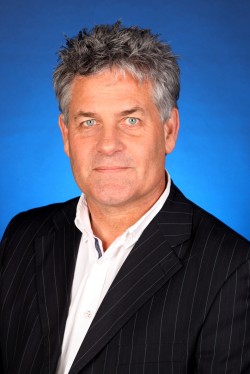
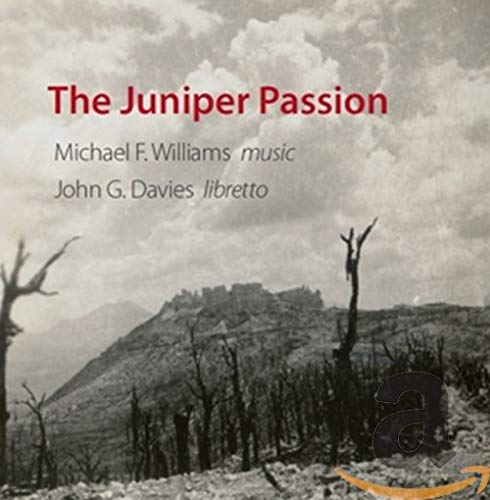
Michael F. Williams [*1962] He was born in New Zealand but left in 1984 for the UK and subsequently settled in Melbourne Australia until 1998 when he returned to his native country. Since his return to New Zealand he has received substantial commissions from most of the country's major musical institutions including the NZSO, NBR New Zealand Opera and Chamber Music New Zealand and his music is regularly broadcast on Radio New Zealand Concert and has recorded a number of works through the Atoll Label. Described as a ‘Landmark in New Zealand composition’, his Triple Concerto for piano trio and orchestra Convergence was premiered by the Opus Orchestra and the New Zealand Chamber soloists to critical acclaim in 2008. His music covers a wide range of genres including chamber music, orchestral, concerti and opera. Polystylistic in his approach to composition, many influences can be heard in his music from Gregorian chant to the use of pitch class sets. Michael maintains an interest in the digital manipulation of acoustic instruments which is evident in a number of his works.

The Juniper Passion, ópera en un prólogo y tres actos [2011]. Artworks.

Imagen

_________________
Imagen


Arriba
 Perfil  
 
 Asunto: Re: La otra ópera
NotaPublicado: 13 Dic 2024 1:33 
Desconectado
Div@
Div@
Avatar de Usuario

Registrado: 05 Oct 2005 20:42
Mensajes: 2995
Imagen

Franco Battiato [1945-2021] He was an Italian singer-songwriter, composer, filmmaker and, under the pseudonym Süphan Barzani, also a painter. He is considered one of the most original personalities in Italian music from the 1970's to now. Together with Alice, Franco Battiato represented Italy at the Eurovision Song Contest 1984 with the melody I treni di Tozeur. Battiato's songs are dreamy, controversial collages of images and sensations, very experimental and convoluted, rich of esoteric, philosophical and East Asian religious themes. His collaborations [from 1994 onward] with the nihilistic-cynical philosopher Manlio Sgalambro have added further depth to his apparently nonsensical lyrics, with references to Emil Cioran, Friedrich Nietzsche and other anarchistic and problematic thinkers. Battiato left his native Sicily moving to Milano around 1965. His first real break occurred in the early 1970's when he began recording a series of albums for the underground label Bla Bla: Fetus [1971], Pollution [1972], Sulle corde di Aries [1973], Clic [1974], M.elle le Gladiator [1975]. With Ricordi, he released Feedback [1975], an anthology in a double album of his Bla Bla production, Battiato [1976], Juke Box [1977] and L'Egitto prima delle sabbie [1978], which gained him, Karlheinz Stockhausen prize. In 1979, Battiato released L'Era del Cinghiale Bianco, his first recording for the EMI italian branch, Patriots [1980] and, in 1981, La voce del Padrone. This was the first Italian album to sell more than a million copies, with very good arrangements and highly inspired and original lyrics, sometimes very deep, sometimes ironic, full of philosophical, political and mythological references. L'arca di Noè [1982], Orizzonti perduti [1983], Mondi lontanissimi [1985], Echoes of sufi dances [1985] were his next albums.

Wikipedia

Genesi, ópera en tres actos [1987]. Fragmento.

Imagen

_________________
Imagen


Arriba
 Perfil  
 
 Asunto: Re: La otra ópera
NotaPublicado: 20 Dic 2024 14:55 
Desconectado
Div@
Div@
Avatar de Usuario

Registrado: 05 Oct 2005 20:42
Mensajes: 2995
Imagen

Maurice Yvain [1891-1965] He was born in 1891 into a musical family in Paris. He was educated by his father, who played the trumpet in the Orchestre de l'Opéra-Comique. From 1903, he studied at the Conservatoire de Paris where he was a pupil of Louis Diemer and Xavier Leroux. An excellent pianist, he first played as an accompanying pianist at the Casino d'Évian. He went on to play with the orchestra at the Casino de Monte Carlo and in the Parisien Cabaret des Quat'z'Arts. After military service from 1912 to 1919, he returned to Paris where he started to compose songs for light music, operettas, musicals, for films such as Vincent Scotto and Henri Christiné. One of his early successes was Dansez-vous le foxtrot in 1919. Maurice Chevalier, whom he had met in the army, introduced him to Albert Willemetz and to the popular Mistinguett who sang one of his best-known songs Mon Homme ["My Man"] [1920]. In 1968, it was sung by Barbra Streisand in the film Funny Girl. He composed several other pieces for Mistinguett, including En douce [1920], La Java [1922], J'en ai marre [1922] and La Belote [1925]. In the 1920s, he began to compose operettas, 18 in all; his satirical Ta Bouche [Your Mouth, 1922] of 1922 was a particular success. The sequels which followed were the Pas sur la Bouche [Not on the Mouth, 1925] and the Bouche a Bouche [Mouth to Mouth, 1925] and both further established the musical virtuosity of Yvain; the former song rendered by Regine Flory made her also a celebrity. Thereafter, he also wrote great sentimental operettas such as Chanson gitane ["Gypsy Song"], many of which were performed at the Théâtre des Bouffes Parisiens. His pieces are characterized by rhythmic precision, imagination and flexibility of musical phrases. A. Willemetz, Jacques-Charles, H. Varna and H. Heanson were his lyricists and librettists. Occasionally he also wrote the lyrics. In the 1930s, his operettas were almost immediately translated and performed in Germany, Hungary and Austria as well as on Broadway where Ta Bouche was presented over a hundred times. Thanks to his success in the United States, several of his pieces appeared in the famous Ziegfeld Follies on Broadway. His Mon Homme featured in the 1936 MGM Academy Award-winning film The Great Ziegfeld. He composed music for several films of notable directors such as Anatole Litvak, Julien Duvivier and Henri-Georges Clouzot. Yvain died in 1965 in Suresnes, near Paris.

Wikipedia

Yes, opereta en tres actos [1928]. Tout est pour vous.

Imagen

Au Soleil du Mexique, opereta en dos actos [1935]. J’ai peur.

Imagen

Chanson Gitane, opereta en dos actos [1947]. Tant Que Le Printemps.

Imagen

_________________
Imagen


Arriba
 Perfil  
 
 Asunto: Re: La otra ópera
NotaPublicado: 27 Dic 2024 15:09 
Desconectado
Div@
Div@
Avatar de Usuario

Registrado: 05 Oct 2005 20:42
Mensajes: 2995
Imagen

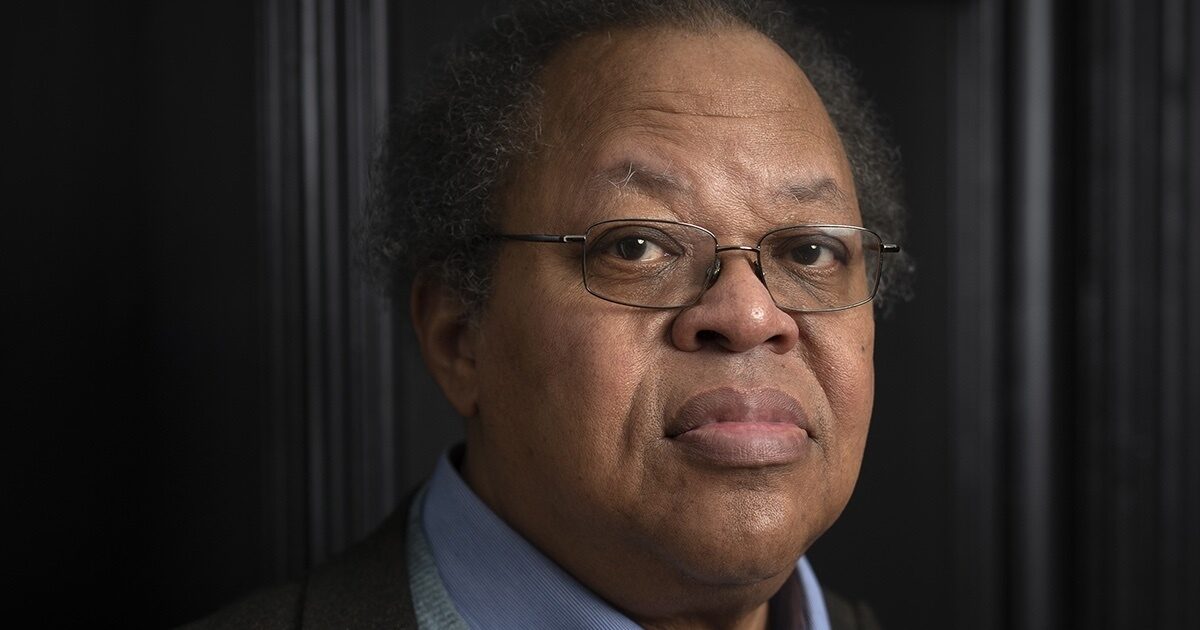
George Emanuel Lewis [*1952] He was born Chicago. He is the Edwin H. Case Professor of American Music at Columbia University, and Area Chair in Composition, as well as Artistic Director of the International Contemporary Ensemble. A Fellow of the American Academy of Arts and Sciences and the American Academy of Arts and Letters, a Corresponding Fellow of the British Academy, and a member of the Akademie der Künste Berlin, Lewis’s other honors include the Doris Duke Artist Award [2019], a MacArthur Fellowship [2002], and a Guggenheim Fellowship [2015]. A member of the Association for the Advancement of Creative Musicians [AACM] since 1971, Lewis’s work is presented by ensembles worldwide, published by Edition Peters. He is widely regarded as a pioneer in the creation of computer programs that improvise in concert with human musicians. He holds honorary doctorates from the University of Edinburgh, Harvard University, the University of Pennsylvania, Oberlin College, the School of the Art Institute of Chicago, New England Conservatory, New College Of Florida, and Birmingham City University, among others.

Amazon

Afterword, an opera in two acts [2015]. Act Two Scene 10: Paris.

Imagen

_________________
Imagen


Arriba
 Perfil  
 
 Asunto: Re: La otra ópera
NotaPublicado: 03 Ene 2025 9:53 
Desconectado
Div@
Div@
Avatar de Usuario

Registrado: 05 Oct 2005 20:42
Mensajes: 2995
Imagen

Dimitri Arakishvili [1873-1953] Born in Vladikavkaz, Terek Oblast, Russian Empire [now North Ossetia, Russia], he graduated, in 1901, from the School of Music and Drama operated by Moscow Philharmonic Society where he was tutored by Alexander Gretchaninov and Willem Kes. In addition he graduated from the Moscow Archaeological Institute in 1917. He helped found the Moscow People's Conservatory and offered free musical classes in Arbat Square in 1906. From 1908 to 1912, was editor-in-chief of the journal Muzika i zhizn. One of his major interests was Georgian folk music and he traveled throughout Georgia collecting traditional music and over 500 folk songs from 1901 to 1908. When Georgia established an independent republic in 1918, Arakishvili moved to Tbilisi and founded a conservatory which was merged with the Tbilisi State Conservatoire in 1923. He taught and composed, and directed the Conservatory from 1926 to 1929. He was actively involved in collecting and popularizing Georgian folk songs and published books on Georgian folk music. Since 1932, he chaired the Union of Georgian Composers. In 1950, he was awarded the Stalin Prize. His opera Tkmuleba o Shota Rustavelze [The Legend of Shota Rustaveli, 1914] marked the beginning of Georgian national opera.

Wikipedia

The legend of Shota Rustaveli, ópera [1914]. Cavatina of King Tamar. Thanks be to God.

Imagen

Imagen

_________________
Imagen


Arriba
 Perfil  
 
 Asunto: Re: La otra ópera
NotaPublicado: 10 Ene 2025 11:56 
Desconectado
Div@
Div@
Avatar de Usuario

Registrado: 05 Oct 2005 20:42
Mensajes: 2995
Imagen

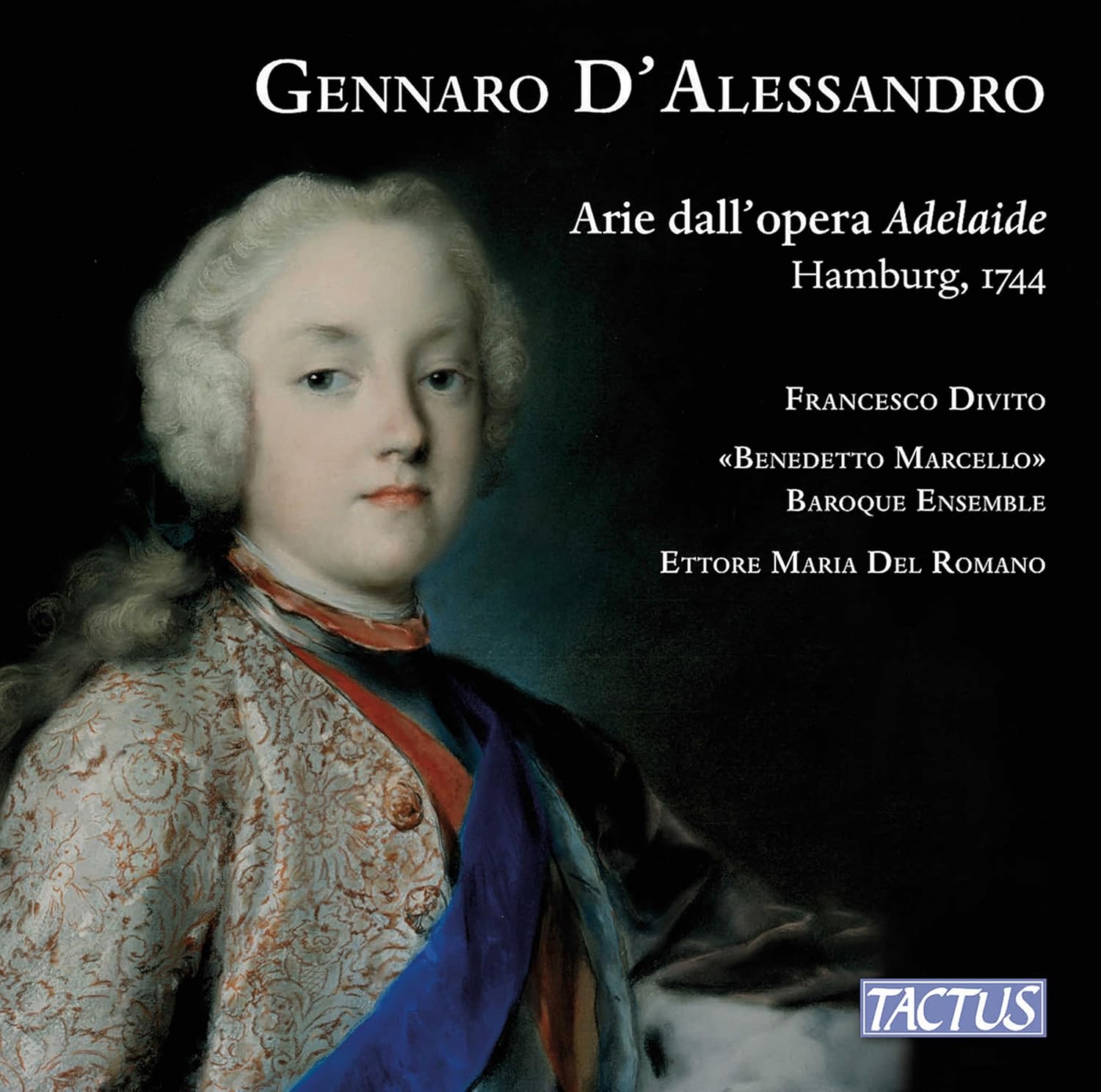
Gennaro D'Alessandro [1717-1778] He was born in Napoli. In the document recording his appointment as maestro di cappella of the Ospedale della Pietà, Venice, in 1739 he is called ‘Alessandro Gennaro Napolitano’, which indicates that he was born or educated or both in the Neapolitan region. Fétis stated that he was born in Naples in 1717, but no confirmation of this is known. He was in service at the Pietà from 21 August 1739 to 13 May 1740 when he was dismissed for lack of diligence. Within that period he was not entirely idle, however, for he presented his opera Ottone at the Theatro S Giovanni Grisostomo, Venice, during Carnival 1740 and his serenata Il coro delle muse at the Ospedale on 21 March of the same year, performed by the pupils themselves. Both compositions were in honour of the Electoral Prince of Saxony, Friedrich Christian. Goldoni, who wrote the words of the serenata, said in his memoirs [Delle commedie di Carlo Goldoni, Venice, 1761] that he adapted them to music that Alessandro had written for three preceding cantatas with texts by Goldoni, La ninfa saggia, Gli amanti felici and Le quattro stagioni. It is presumed that these three cantatas were also composed during the period 1739–1740. No information on Alessandro’s movements after his dismissal from the Ospedale has come to light.

Grove

Ottone [Adelaide], opera [1740]. T'inganni se speri.

Imagen

_________________
Imagen


Arriba
 Perfil  
 
 Asunto: Re: La otra ópera
NotaPublicado: 17 Ene 2025 10:44 
Desconectado
Div@
Div@
Avatar de Usuario

Registrado: 05 Oct 2005 20:42
Mensajes: 2995
Imagen

Friedrich Klose [1862-1942] He was born in Karlsruhe, Margraviate of Baden-Durlach. He studied with Vinzenz Lachner in Karlsruhe, and then with Anton Bruckner in Vienna, and recorded his impressions of his time with Bruckner in a book. His Mass in d-minor was written in response to Franz Liszt's death. His opera Ilsebill [1903] is inspired by the music of Richard Wagner and Richard Strauss, and the plot is based on the Brothers Grimm tale of a fisherman who catches a huge fish which grants ever increasingly more greedy wishes and this is reflected in the increasing complexity of orchestration during the opera. It was premiered in 1903 in Karlsruhe under the direction of Felix Mottl. He ended his career as a composer and a teacher in 1919 and retired to Switzerland.

Wikipedia

Ilsebill, Musikdrama [1903]: Escena segunda: Wie freundlicher Art ist das adelig Fraulein.

Imagen

_________________
Imagen


Arriba
 Perfil  
 
 Asunto: Re: La otra ópera
NotaPublicado: 24 Ene 2025 10:16 
Desconectado
Div@
Div@
Avatar de Usuario

Registrado: 05 Oct 2005 20:42
Mensajes: 2995
Imagen

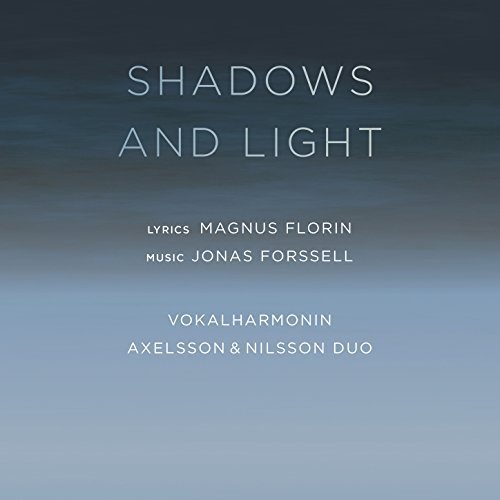
Jonas Forssell [*1957] He was born in Stockholm. He studied composition and instrumentation with Hans Eklund and Arne Mellnäs at the Royal College of Music in Stockholm from 1979-1982, as well as jazz and arranging for Bengt-Arne Wallin. Forssell plays woodwinds, primarily clarinet and baritone sax, and works as a musician in various genres, not least as a theatre musician; he has written music for among others the Swedish National Theatre Centre and the regional theatres in Göteborg and Uppsala. He has also written a number of operas, such as the acclaimed Riket är ditt [“Thine is the Kingdom”, 1991], which was his definitive breakthrough as a composer and resulted in Svenska Dagbladet’s Opera Prize and the German Wolf Ebermann Prize. In 1988, he was the first modern composer to be commissioned to write a musical drama for the Drottningholm Court Theatre and its baroque orchestra, and during the summer of 1999, the opera Trädgården [“The Garden”] had a successful première. The opera is based on Magnus Florin’s novel about the Swedish “flower king” Carl von Linné, and was later chosen by Financial Times as one of the world’s six best opera productions that year.

1996-1998 Jonas Forssell was the artistic director of the Northern Opera of Sweden in Umeå, and 2002-2005 he held the same position at “The Other Opera” in Copenhagen, a chamber opera company dedicated only to contemporary works. 2005-2011 he was a full-time “composer in residence” at the Malmö Opera, writing three full length opera works for the house. The first of these The Pauper Princess had its première in February-07 and the second Death and the Maiden based on a play by Ariel Dorfman, and with the author as librettist, had its world première in September-08. The final and third project Secrets, an opera based on the life of Emanuel Swedenborg, the Swedish 18th century scientist and Christian mystic, was premièred the 12th of March 2011. In 2001 a concerto for basset clarinet by Forssell, In the Beginning, was premièred with Swedish clarinettist Staffan Mårtensson [recorded on Phono Suecia PSCD 168]. 19-22 April 2012 Forssell was weekend composer with the Royal Stockholm Philharmonic Orchestra and since September 2010 Forssell works as PhD research student at the University College of Opera in Stockholm on a dissertation [scheduled Oct 2015] called The transfigurations of the text.

Circolo Scandinavo

Shadows and Light, a madrigal opera [2012]. Inga hjärtslag.

Imagen

_________________
Imagen


Arriba
 Perfil  
 
 Asunto: Re: La otra ópera
NotaPublicado: 31 Ene 2025 7:13 
Desconectado
Div@
Div@
Avatar de Usuario

Registrado: 05 Oct 2005 20:42
Mensajes: 2995
Imagen


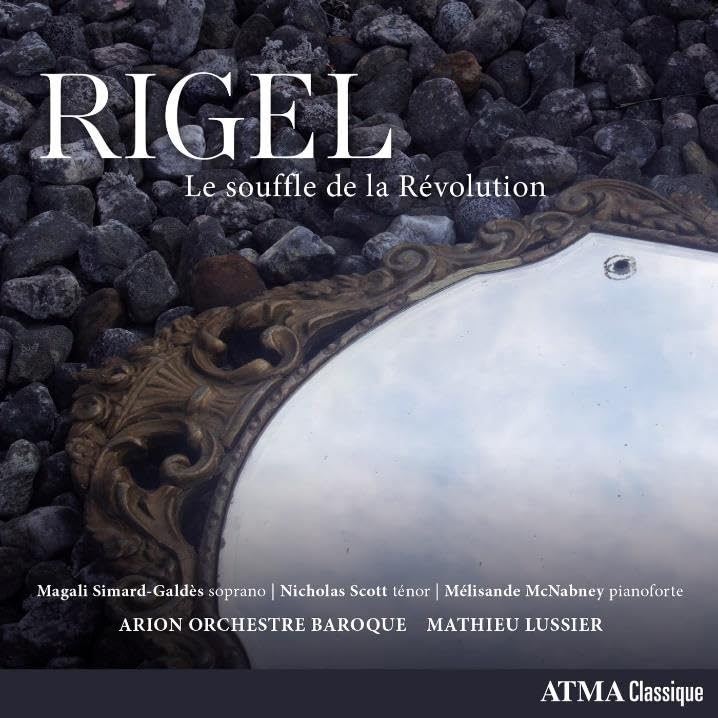
Henri-Joseph Rigel [1741-1799] He was born in Wertheim am Main. He was the son of Georg Caspar Riegel, an intendant [from about 1725 to his death in 1754] for Prince Löwenstein. After Georg’s death his widow Maria Anna petitioned the prince for the support of her under-aged children, and it is probable that he furthered the musical education of her sons. In 1767 the name Riegel appeared for the first time in the Breitkopf Catalogue, with incipits for seven symphonies and one violin concerto. According to La Borde [Essai sur la musique, 1780], Rigel studied with Jommelli in Stuttgart, was sent by F.X. Richter to France ‘pour faire l’éducation d’une jeune personne’, and then settled in Paris in 1768. From this statement, it could be inferred that he studied in Mannheim with Richter. However, La Borde’s date for Rigel’s arrival in the French capital is inexact. The French press places him in Paris early in 1767 with the announcement of his op.1, Six sonates pour clavecin, obtainable ‘chez l’auteur, rue S. Marc, maison de M. Dupin de Francueil’ [Annonces, 9 April 1767]. The dedicatee, Mlle Dupin de Francueil [later George Sand’s aunt], is possibly the ‘jeune personne’ referred to by La Borde. Rigel was probably first employed, about 1764–1765, outside Paris on her father’s estates. In 1768 he established his own residence in Paris, and that is also the probable date of his marriage; it was in these quarters that his sons were born in 1769 and 1772.

Before 1780 Rigel published his own music, ‘chez l’auteur’, with his wife as engraver. He even published at least one work by another composer: Pièces de clavecin, harpe ou pianoforte … par M. de Chabanon, mis au jour par Rigel, 1775. After his arrival in Paris, Rigel established a distinguished reputation in the musical life of that city. In 1772 he served as a principal judge, along with Duni and F.-A. Philidor, of an important contest for the best symphony and symphonie concertante; the winners of the valuable first and second prizes were Cannabich and Eichner. During the 1770s Rigel wrote numerous instrumental works [sonatas, quartets, concertos and symphonies] that were performed in Parisian concert rooms. On 2 February 1774 a symphony by Rigel first appeared on a programme at the Concert Spirituel. Two oratorios by him written during this period, La sortie d’Egypte [1774] and La déstruction de Jéricho [1778], enjoyed an immense success; the former was performed at the Concert Spirituel no fewer than 27 times from 1775 to 1786, and was performed in Paris as late as 1822.

In about 1780 Rigel turned his attention from instrumental and sacred vocal composition to the writing of large-scale stage works. After 1780 his wife is no longer mentioned, and within the next two years, his younger brother Anton Riegel came to live with him and act as his publisher until Boyer took over the sale and publication of his works in 1784. Between 1778 and his death in 1799, Rigel composed all of his 14 operatic works. He worked with a variety of librettists, composing operas for most of the prominent Parisian theatres, including the Comédie-Italienne, Théâtre Feydeau, Théâtre de l’Ambigu-Comique and the Opéra. In 1783 [and later] he was officially listed among the ten ‘compositeurs de Concert Spirituel’. According to the projet of 1783 for the Ecole Royale de Chant, Rigel was appointed maître de solfège. The same source states that he was previously associated with the Paris Opéra. After the Revolution, when the school was reorganized as the Conservatoire, he remained as a professor première classe of the piano, a position he held for the rest of his life. Also in 1783 [and in 1787–1788] Rigel is listed as chef d’orchestre of the Concert Spirituel. In the early 1790s works by him appeared frequently on programmes at the Cirque du Palais-Royal and the Concert du Cirque National.

Grove

Blanche et Vermeille, comédie pastorale en dos actos [1781]. Je vous entends, infidèle.

Alix de Beaucaire, drame lyrique en tres actos [1787]. Quel caprice guide mes traits.

Pauline et Henri, trait historique mêlé de musique en un acto [1793]. Au fond, pourtant il n’a pas tort.
Imagen

_________________
Imagen


Arriba
 Perfil  
 
 Asunto: Re: La otra ópera
NotaPublicado: 04 Feb 2025 14:57 
Desconectado
Concertino
Concertino
Avatar de Usuario

Registrado: 23 Jul 2007 12:38
Mensajes: 909
Hola Zelenka,

Probablemente ya has hablado de él y no he sabido dar con la entrada.

El pasado 19 de enero descubrí a Domingo Terradellas en la programación Universo Barroco del Auditorio Nacional en Madrid. Se trataba de su primer oratorio, Giuseppe riconosciuto, reconvertido a ópera sacra por el propio compositor tras su estreno y fue esta versión (la operística) la que se presentó.

Me quedé impresionada por la calidad de la música. Reconozco que soy un poco escéptica sobre las recuperaciones históricas que se hacen a ultranza hoy en día de muchas partituras olvidadas que no han llegado a nuestros días, aunque no tengan gran valor. Pero no es en absoluto el caso.

Este año también se podrá ver su ópera La Merope en el Teatro Real, en una única representación en versión de concierto este mismo mes de febrero (el 21 concretamente).

No se la pierdan.

_________________
No importa el problema, no importa la solución. Me quedo con lo poco que queda entero en el corazón. (Los Rodríguez)


Arriba
 Perfil  
 
 Asunto: Re: La otra ópera
NotaPublicado: 04 Feb 2025 15:23 
Desconectado
Div@
Div@
Avatar de Usuario

Registrado: 05 Oct 2005 20:42
Mensajes: 2995
Hace diez años.

https://www.unanocheenlaopera.com/viewt ... 77#p349577

_________________
Imagen


Arriba
 Perfil  
 
Mostrar mensajes previos:  Ordenar por  
Nuevo tema Responder al tema  [ 1589 mensajes ]  Ir a página Anterior  1 ... 99, 100, 101, 102, 103, 104, 105, 106  Siguiente

Todos los horarios son UTC + 1 hora [ DST ]


¿Quién está conectado?

Usuarios navegando por este Foro: Google [Bot] y 8 invitados


No puede abrir nuevos temas en este Foro
No puede responder a temas en este Foro
No puede editar sus mensajes en este Foro
No puede borrar sus mensajes en este Foro


Powered by phpBB © 2000, 2002, 2005, 2007 phpBB Group
Traducción al español por Huan Manwë para phpbb-es.com