Fecha actual 24 Sep 2026 15:09

Todos los horarios son UTC + 1 hora [ DST ]


Nuevo tema Responder al tema  [ 1636 mensajes ]  Ir a página Anterior  1 ... 105, 106, 107, 108, 109, 110  Siguiente
Autor Mensaje
 Asunto: Re: La otra ópera
NotaPublicado: 24 Abr 2026 14:52 
Desconectado
Div@
Div@
Avatar de Usuario

Registrado: 05 Oct 2005 20:42
Mensajes: 3034
Perdón por ser tan quisquilloso, pero cuál es el sentido de citar toda la viñeta, para responder con una linea? :roll:

_________________
Imagen


Arriba
 Perfil  
 
 Asunto: Re: La otra ópera
NotaPublicado: 24 Abr 2026 15:03 
Desconectado
Div@
Div@
Avatar de Usuario

Registrado: 14 Mar 2011 22:55
Mensajes: 2759
Ubicación: Nibelheim (obviamente)
Zelenka escribió:
Perdón por ser tan quisquilloso, pero cuál es el sentido de citar toda la viñeta, para responder con una linea? :roll:

La simple comodidad.
Pero en el próximo mensaje incluyo un poema, por ejemplo, para llenar un poco más :lol: .

_________________
"Tornate all'antico e sarà un progresso" (Giuseppe Verdi, compositor y genio).

Esto y otras muchas cosas más en Desde el Nibelheim


Arriba
 Perfil  
 
 Asunto: Re: La otra ópera
NotaPublicado: 24 Abr 2026 15:29 
Desconectado
Div@
Div@
Avatar de Usuario

Registrado: 05 Oct 2005 20:42
Mensajes: 3034
Mira qué fácil. :P

Imagen

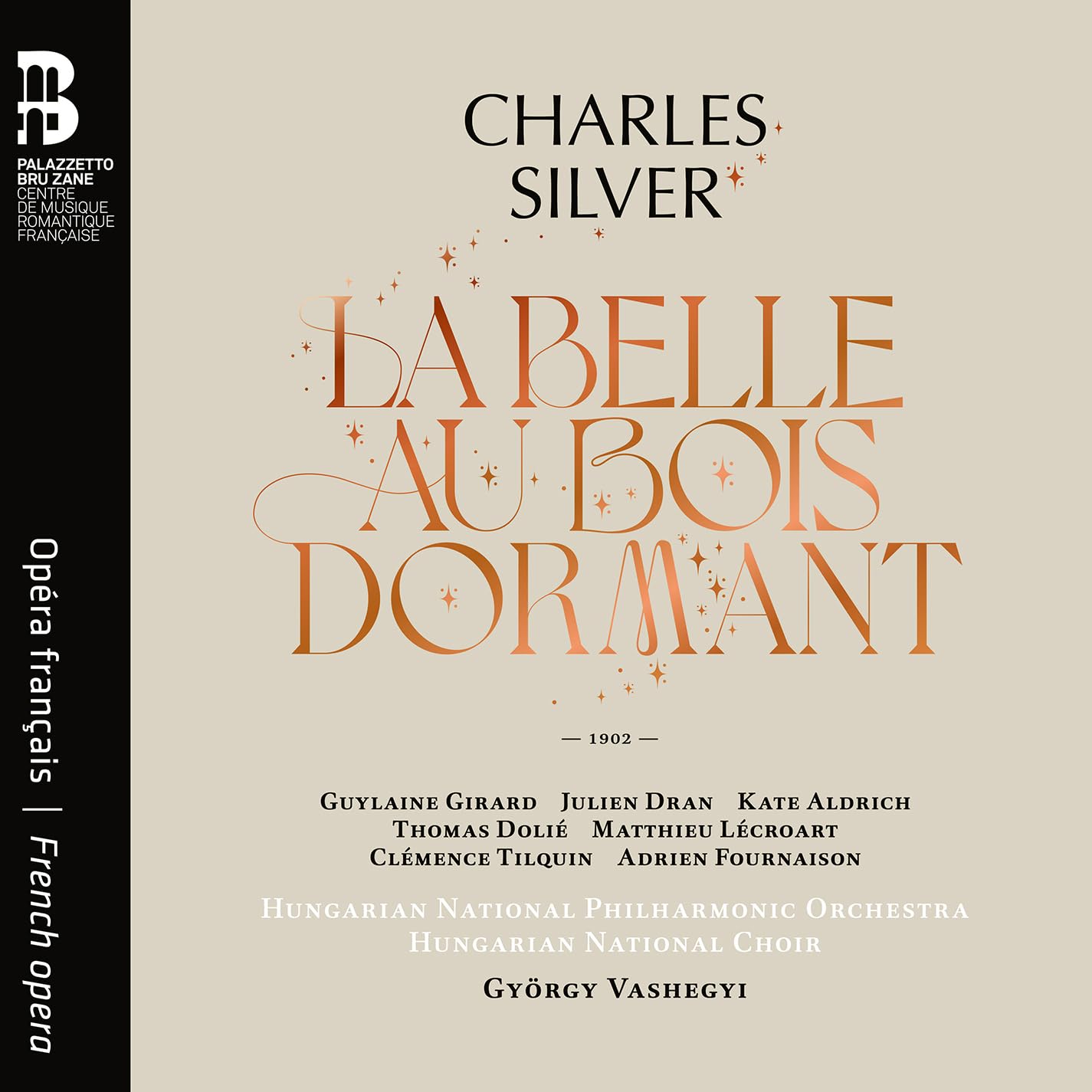
Acaba de salir a la venta (me ha llegado el aviso de Bru Zane). ¡Pero menudo precio. (aunque el pack incluya un hermoso libro..!).

_________________
Imagen


Arriba
 Perfil  
 
 Asunto: Re: La otra ópera
NotaPublicado: 01 May 2026 0:25 
Desconectado
Div@
Div@
Avatar de Usuario

Registrado: 05 Oct 2005 20:42
Mensajes: 3034
Imagen

Paolo Bonfichi [1769-1840] He was born in Livraga, near Lodi. The birthdate given is from his autobiographical sketch in the Allgemeine musikalische Zeitung; Fétis gave 16 October and others 17 December. He taught himself to play the harpsichord and organ before becoming a student at the university in Parma, where he also had lessons in figured bass. In 1787 he entered the order of the Servi di Maria and was obliged to give up music, but on being sent to Rome in 1790 for a course of theology, he also studied counterpoint under Guglielmi and began to compose. Returning to Parma after six years, he remained in his monastery until its suppression in 1805. He then settled in Milan as a singing teacher and composer. In 1807 he lost to Asioli in his candidacy for the posts of composition master and censore at the conservatory. In 1828 he failed to become maestro di cappella at S Petronio, Bologna, but from 1829 to 1839 he held that post at the Santa Casa of Loreto. Bonfichi composed church music primarily, but also instrumental and vocal works and at least four operas [he admitted only to the two serious ones in his autobiographical sketch]. He was best known for his sacred cantatas and oratorios, most of the latter first performed at Rome, either privately or in the Chiesa Nuova of the Filippini. These were highly regarded for their dramatic style, a quality that caused his church music to be condemned by the reformers later in the century.

Grove

Attila, ópera [1814]. Scena e cavatina. Qual mi circonda e agghiaccia… Dolenti e care immagini… Vedrai quest'anima.

Imagen

_________________
Imagen


Arriba
 Perfil  
 
 Asunto: Re: La otra ópera
NotaPublicado: 08 May 2026 9:55 
Desconectado
Div@
Div@
Avatar de Usuario

Registrado: 05 Oct 2005 20:42
Mensajes: 3034
Imagen

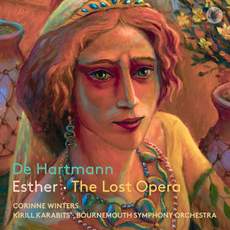
Thomas Alexandrovich de Hartmann [1884-1956] He was born on his father’s estate in Khoruzhivka, Poltava Governorate, Russian Empire (now Ukraine), to Alexander Fomich de Hartmann and Olga Alexandrovna de Hartmann, née de Kross, both of German descent. de Hartmann studied piano with Anna Yesipova (Essipova), the second wife and former student of Theodor Leschetizky at the St. Petersburg Conservatory. He studied musical composition with three of the greatest Russian composers of the 19th century: Nikolai Rimsky-Korsakov, Anton Arensky and Sergei Taneyev. He received his diploma from the St. Petersburg Conservatory at the age of 18. In 1907, his ballet The Pink Flower, produced by Sergei Diaghilev with Vaslav Nijinsky and Tamara Karsavina in the cast, was presented at the Imperial Opera. The Tsar was so impressed that he himself granted de Hartmann exemption from military duty so that he might study conducting in Munich. De Hartmann studied conducting with Felix Mottl before World War I.

In Munich, Thomas de Hartmann met the artist, former Sufi student and later stage impresario, Alexander de Salzmann; they were both friends of Rainer Maria Rilke and Wassily Kandinsky. De Hartmann married Olga Arkadievna Schumacher, a celebrated opera singer; her father was a high official in tsarist Russia. Thomas was the nephew of Eduard von Hartmann, the author of Philosophy of the Unconscious, a book published in Germany in 1869 but well known in America and England. After the Revolution, Thomas de Hartmann went to Caucasus, Taught at the Tiflis Conservatory (1919); then went to Paris, where he remained until 1951, when he settled in New York City.

Bach Cantatas

Esther, tragédie musicale [1949]. O reine infortunée!:

Imagen

_________________
Imagen


Arriba
 Perfil  
 
 Asunto: Re: La otra ópera
NotaPublicado: 15 May 2026 12:15 
Desconectado
Div@
Div@
Avatar de Usuario

Registrado: 05 Oct 2005 20:42
Mensajes: 3034
Imagen

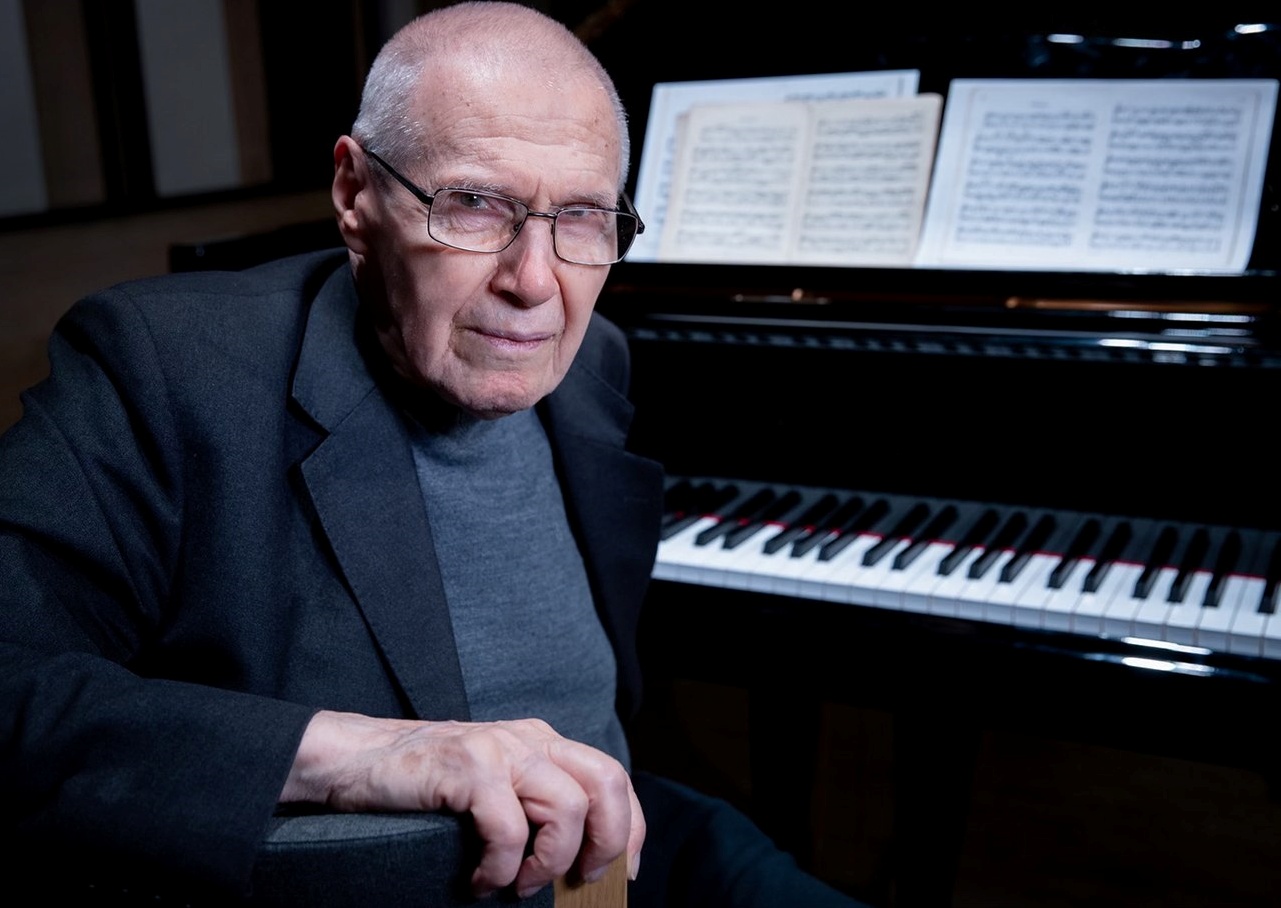
György Kurtág [*1923] He was born in Lugoj, Romania, to Jewish Hungarian parents. Kurtág began studying piano in 1940 with Magda Kardos and composition with Max Eisikovits. He moved to Budapest in 1946, where he studied composition with Sandor Veress and Ferenc Farkas, piano with Pál Kadosa, and chamber music with Leo Weiner. Unlike his friend Ligeti, Kurtág remained in Hungary, where nearly all of his work was premiered until the 1980s. He did spend some time in Paris from 1957 to 1958, where he studied with Marianne Stein and took classes with Olivier Messiaen and Darius Milhaud. The influence of the latter, along with that of the Concerts du Domaine Musical, directed by Pierre Boulez, fostered a strong connection with the techniques of the Vienna School: especially Arnold Schoenberg and Anton Webern, as well as with Karlheinz Stockhausen's Gruppen. Kurtág's time in Paris had a deep and lasting effect on his approach to composition. The first composition he completed upon returning to Budapest, his Quatuor à cordes, is known as his Opus n°1.

Kurtág taught piano and then chamber music at the Franz Liszt Academy of Music in Budapest from 1967 until his retirement in 1986, and continued teaching for many years after. Játékok ["Games," 1973-1976], a cycle of piano pieces written for children and inspired by their play, bears witness to Kurtág's strong commitment to teaching and his innovative pedagogical approach. Most of Kurtág's works are limited to short forms, as is evident in the title of his quartet cycle Microludes [1977-1978]. In particular, he composes short vocal pieces; voice, for him, is an instrument with new possibilities that reach far beyond its traditional narrative and operatic use. These short pieces are often gathered into cycles, such as Messages de feu Demoiselle Troussova for soprano and ensemble [1976-1980], or Les Propos de Peter Bornemisza, opus 7 [1963-1968]. Semantics are a key preoccupation of Kurtág's. In music composed for poems by Pilinszky, Dalos, Kafka, or Beckett, he highlights as strongly as possible the declamatory dimension of these literary works, underlining their qualities as whole, intelligible units.

Kurtág has great affection for chamber music, as well, having taught it for the greater part of his career. The cymbalom, a traditional Hungarian instrument, appears frequently, in pieces such as Duos [1960-1961] and Szálkák [1973]. With the exception of a few works, such as Stele [1994] for large orchestra, commissioned by Claudio Abbado, and …Concertante, op. 42 for violin, viola, and orchestra [2003], Kurtág rarely wrote major orchestral pieces, preferring smaller groupings and briefer forms, seeking out the essential and working for dramatic concision within a certain asceticism. An honorary member of several academies in Europe and the United States, Kurtàg was invited for residencies in numerous European cities and received many awards and honors, including the Ernst von Siemens Prize in 1998 and the Grawemeyer Award for Concertante, Op. 42, in 2006.

IRCAM

Fin de partie, ópera en un acto [2018]. Song.

Imagen

_________________
Imagen


Arriba
 Perfil  
 
 Asunto: Re: La otra ópera
NotaPublicado: 22 May 2026 11:44 
Desconectado
Div@
Div@
Avatar de Usuario

Registrado: 05 Oct 2005 20:42
Mensajes: 3034
Imagen

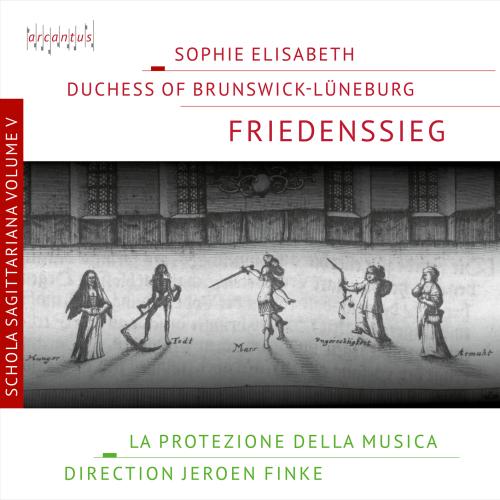
Elisabeth Sophie zu Mecklenburg, Duchess of Brunswick-Lüneburg [1613-1676] She was born un Güstrow. She began studying music at the court of her father, Duke John Albert II of Mecklenburg-Güstrow, where was an orchestra known for its use of fine English musicians, such as William Brade. She moved to the court of Kassel, which also had a strong musical tradition, when the Thirty Years War threatened her court in 1628. In 1635, she married the learned Augustus the Younger, Duke of Brunswick-Lüneburg with whom she had two children. Elisabeth Sophie was charged with organizing the court orchestra, and at times worked closely with Heinrich Schütz, who was appointed absentes Kapellmeister in 1655. She may have collaborated with him on arias in his Theatralische neue Vorstellung von der Maria Magdalena. Most of Elisabeth Sophie 's compositions are hymns or devotional arias. Some of these were published in 1651 and 1667. The one printed in 1651, Vinetum evangelicum, Evangelischer Weinberg, is believed to have been the first music published by a woman in Germany. She also played a major role in establishing large court entertainments, including masquerades, plays, and ballets, to which she at times wrote librettos and music. Her additional involvement in these entertainments is unclear. Two of her dramatic works survive: Friedens Sieg [1642, Brunswick] and Glückwünschende Freudensdarstellung [Lüneburg, 1652].

Wikipedia

Friedenssieg, Freudenspiel [1642]. Ich, der hässlich bleiche Tod.

Imagen

_________________
Imagen


Arriba
 Perfil  
 
 Asunto: Re: La otra ópera
NotaPublicado: 29 May 2026 10:58 
Desconectado
Div@
Div@
Avatar de Usuario

Registrado: 05 Oct 2005 20:42
Mensajes: 3034
Imagen

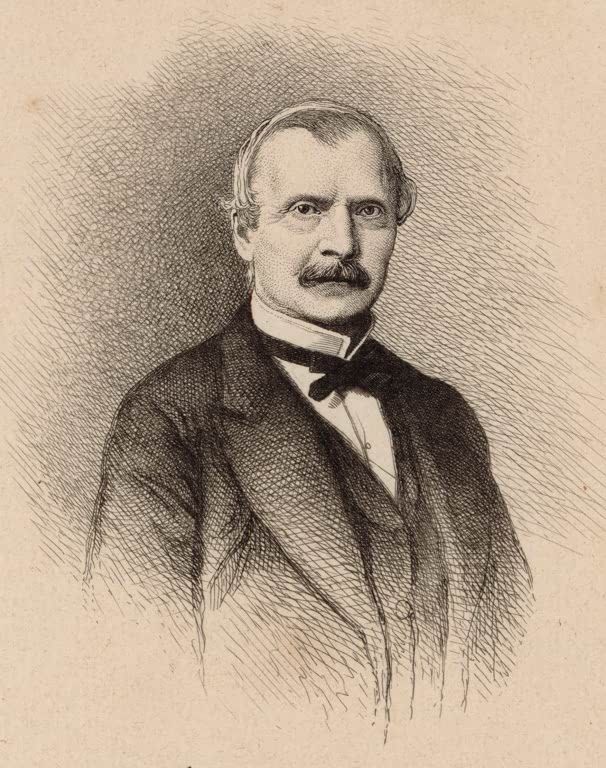
Auguste Mermet [1810-1889] Born in Brussels, Mermet was the son of an officer in the Grande Armée and originally intended to have a military career, but after learning to play the flute and later privately studying music composition with Jean-François Le Sueur and Fromental Halévy, abandoned the military for music. In Mermet's youth, he composed a 2-act opéra-comique, La bannière du roi with a libretto by Pierre Carmouche, which was first performed at Versailles in April 1835. Alexandre Soumet then accepted to transform for him his tragedy about Saul into a libretto of drame lyrique. Auguste Mermet composed the score of this work, which was performed without success at the Paris Opera in 1846 under the title of Le roi David with Rosine Stoltz as David. His Roland à Ronceveaux, for which he composed the lyrics and the music, was staged in 1864 after Napoléon III imposed the opera on the management of the theater. Roland had received 65 performances by 1867, a success at least partly due to its patriotic flavor and spectacular staging. Mermet also composed a four-act opera, Jeanne d'Arc, to his own libretto based on a play by Jules Barbier, which was the first premiere to be presented at the Palais Garnier [5 April 1876]. The ballet was choreographed by Louis Mérante. Gabrielle Krauss sang the title role, and Jean-Baptiste Faure was Charles VII, but the opera received only 15 performances, the last on 27 November. Tchaikovsky used Mermet's libretto as one of the sources for his opera The Maid of Orleans. Hugh Macdonald, writing in The New Grove Dictionary of Opera, described his music as "direct, attractive, unadventurous, and noisy" and as modeled on Meyerbeer and Halévy.

Wikipedia

Roland à Roncevaux, ópera en cuatro actos [1864]. Récit et Air: Prête à te fuir... Le soir pensive.

Imagen

_________________
Imagen


Arriba
 Perfil  
 
 Asunto: Re: La otra ópera
NotaPublicado: 05 Jun 2026 8:10 
Desconectado
Div@
Div@
Avatar de Usuario

Registrado: 05 Oct 2005 20:42
Mensajes: 3034
Imagen

Anders Johan Ture Rangström [1884-1947] He was born in Stockholm, where in his late teens he started to write songs. His music teacher suggested that he should "vary the harmonies a bit more, make it a bit wilder!" He followed this advice and soon gained the nickname among his colleagues of "Sturm-und-Drangström". He travelled to Berlin where he studied under Hans Pfitzner for a while in 1905–1906, and also studied singing with the Wagnerian Julius Hey, with whom he later went to Munich for further studies. His compositions at this time were chiefly for voice and piano. Between 1907 and 1922 he taught singing and from 1922 to 1925 he was principal conductor of the Gothenburg Symphony Orchestra. He founded the Swedish Society of Composers in 1918, and he was employed to promote the works of the Royal Swedish Opera from 1931 to 1936. After this he worked freelance and spent the summers on the island of Törnsholmen which he had been given by the people of Sweden who raised the money to celebrate his fiftieth birthday.

Wikipedia

Kronbruden, ópera en cuatro actos [1919]. Lille gulle, sover han än?

Imagen

_________________
Imagen


Arriba
 Perfil  
 
 Asunto: Re: La otra ópera
NotaPublicado: 12 Jun 2026 0:10 
Desconectado
Div@
Div@
Avatar de Usuario

Registrado: 05 Oct 2005 20:42
Mensajes: 3034
Imagen

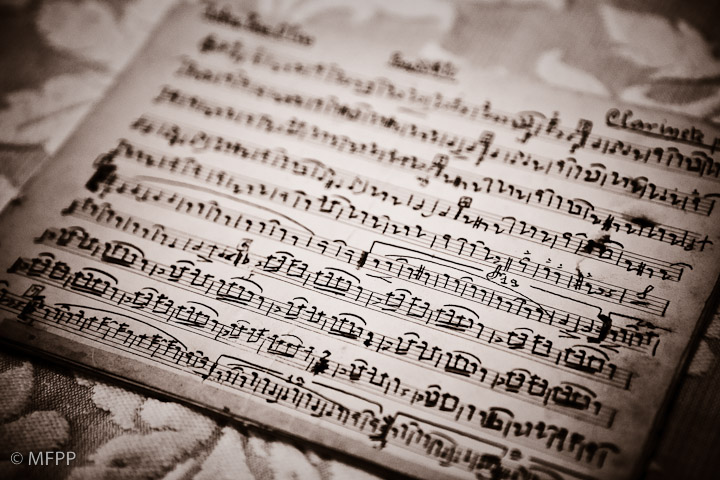
Anónimo [S. XVIII]. The Selvaggia e Dameta manuscript intermezzo in two parts comes from the Estense Library. The work is for Alto, Basso, three instruments and Basso continuo. The story is about jealousy, resentment, deception and quarrels.There are three characters present in the scenes: the old shepherd Dameta, Selvaggia - his young companion, and Madama del Inchiostro [who is none other than Selvaggia in disguise to expose the contradictions of Dameta’s jealousy].The fourth character, who does not openly appear, is the young shepherd Aminta who pursuits Selvaggia’s love. She pretends to not disdain the lad’s attentions, thereby provoking old Dameta’s irascible jealousy.

There is no indication that tells us who the author is or in which opera this intermezzo was set. Elisabeth Reisinger and her colleague John Wilson from the University of Vienna, point out only a title – and no other indications - in an inventory dating 1784 from the library of court music in Bonn. An interesting fact is the presence in Dresda, as well, of a Dameta and Selvaggia score, which is an extract from Scene buffe della Dafni by Alessandro Scarlatti [a woodland fable in three acts from a libretto dated 1700 by Francesco Maria Paglia]. The librettos of both compositions, except for a few verses, are different from one another, as is the music. The extensive version is for alto and basso while the one from Dresda is for singing voice and basso. The brief score of Selvaggia and Dameta from Dafni by Scarlatti is an extract of comedic scenes within the acts – these were used to lighten a serious [and often heavy] plot in musical dramas, or one like the aforementioned woodland fable [however, the annotation written in italics on the title page refers to it as Dramma del Paglia].

It appears, therefore, that there was a difference in the way the two scores of Selvaggia and Dameta were utilized. In fact, in the Dafni, it’s the narrative expedient that digresses, diverts, and distracts one from the main scene as it develops, with no solution for continuity. The anonymous composition from the Estense Library, divided into two parts called First Intermezzo and Second Intermezzo, is meant to be placed between the acts of the main opera [although it is not yet known which opera].The term intermezzo, in this case, is to be understood evidently as meaning interval [often used during a scene change] between one act and another.

Tactus

Selvaggia e Dameta, intermezzo [S. XVIII]. Fragmento.

Imagen

_________________
Imagen


Arriba
 Perfil  
 
 Asunto: Re: La otra ópera
NotaPublicado: 15 Jun 2026 9:33 
Desconectado
Div@
Div@
Avatar de Usuario

Registrado: 17 Feb 2010 23:50
Mensajes: 3884
Ubicación: Calle Mossén Femades
No sabía que había óperas de autor desconocido. Sí de lo contrario.
En Literatura, Anónimo es uno de los autores más prolíficos. :wink:

_________________
Mejor un mal Verdi que un buen Britten.


Arriba
 Perfil  
 
 Asunto: Re: La otra ópera
NotaPublicado: 15 Jun 2026 12:56 
Desconectado
Div@
Div@
Avatar de Usuario

Registrado: 05 Oct 2005 20:42
Mensajes: 3034
Estudios recientes han demostrado que Anónimo no era una persona, sino un apellido. Ya que solo así se explica que haya hecho tanto a través del tiempo. :P

_________________
Imagen


Arriba
 Perfil  
 
 Asunto: Re: La otra ópera
NotaPublicado: 15 Jun 2026 14:00 
Desconectado
Crítico ciclotímico
Avatar de Usuario

Registrado: 15 Sep 2014 19:40
Mensajes: 6471
Ubicación: MI6, London.
Una teoría filológica muy extendida es que en realidad "anónimo" no deja de ser una especie indefinida de "acróstico" con muchas posibles significaciones, dependiendo del orden en que se coloquen las letras A N O N I M O. Doctores tiene la Iglesia, pero en mi humilde y profana opinión, yo creo que es un insulto a la obra misma, del tipo "Ano, ni mu" esto es, "que te calles" transformando el "mu" por el "mo" por una cuestión eufónica..

_________________
"Per ser feliç, mortal, camina sempre i oblida"
Joan Brossa


Arriba
 Perfil  
 
 Asunto: Re: La otra ópera
NotaPublicado: 18 Jun 2026 15:59 
Desconectado
Div@
Div@
Avatar de Usuario

Registrado: 05 Oct 2005 20:42
Mensajes: 3034
Pido una disculpa porque me confundí en una viñeta. :oops:

Confundí a Joseph François Salomon con Johann Peter Salomon. Nadie se dio cuenta que la viñeta estaba mal, ya que la fecha de composición la ópera es 1713 y Johann Peter Salomon nació en 1745.

El error ya fue corregido.

https://unanocheenlaopera.com/viewtopic ... 24#p825724

_________________
Imagen


Arriba
 Perfil  
 
 Asunto: Re: La otra ópera
NotaPublicado: 19 Jun 2026 21:48 
Desconectado
Div@
Div@
Avatar de Usuario

Registrado: 05 Oct 2005 20:42
Mensajes: 3034
Imagen

Jenő Huszka [1875-1960] At the age of 5, he had his first performance – nicely played violin. He studied composition at the Academy of Music (Zeneakadémia) in Budapest. As a young man [in 1896] he was a member of the Lamoureux Orchestra in Paris. He also had to study law (this was the wish of his parents). After finishing his studies, he worked in the Ministry of Education in Budapest, in the department of art. His friend Ferenc Martos [1875–1938}, a distinguished Hungarian librettist, worked in the same department and wrote all the librettos for his operettas. The music of Jenő Huszka is considered fresh, sweet and romantic. It is inspired by Hungarian folk music and the waltzes of Vienna.

Wikipedia

Bob herceg, opereta en tres actos. [1902]. Aria: Londonban hej!.

Imagen

_________________
Imagen


Última edición por Zelenka el 20 Jun 2026 12:01, editado 1 vez en total

Arriba
 Perfil  
 
Mostrar mensajes previos:  Ordenar por  
Nuevo tema Responder al tema  [ 1636 mensajes ]  Ir a página Anterior  1 ... 105, 106, 107, 108, 109, 110  Siguiente

Todos los horarios son UTC + 1 hora [ DST ]


¿Quién está conectado?

Usuarios navegando por este Foro: No hay usuarios registrados visitando el Foro y 45 invitados


No puede abrir nuevos temas en este Foro
No puede responder a temas en este Foro
No puede editar sus mensajes en este Foro
No puede borrar sus mensajes en este Foro


Powered by phpBB © 2000, 2002, 2005, 2007 phpBB Group
Traducción al español por Huan Manwë para phpbb-es.com