Fecha actual 24 Sep 2026 20:43

Todos los horarios son UTC + 1 hora [ DST ]


Nuevo tema Responder al tema  [ 1636 mensajes ]  Ir a página Anterior  1 ... 106, 107, 108, 109, 110  Siguiente
Autor Mensaje
 Asunto: Re: La otra ópera
NotaPublicado: 19 Jun 2026 21:50 
Desconectado
Div@
Div@
Avatar de Usuario

Registrado: 05 Oct 2005 20:42
Mensajes: 3034
Esa fue la viñeta No. 900.

Imagen

_________________
Imagen


Arriba
 Perfil  
 
 Asunto: Re: La otra ópera
NotaPublicado: 24 Jun 2026 9:11 
Desconectado

Registrado: 24 Jun 2026 9:06
Mensajes: 0
Thank you.


Arriba
 Perfil  
 
 Asunto: Re: La otra ópera
NotaPublicado: 24 Jun 2026 10:13 
Desconectado
Div@
Div@
Avatar de Usuario

Registrado: 05 Oct 2005 20:42
Mensajes: 3034
Thank you for keeping up with the thread. :wink:

_________________
Imagen


Arriba
 Perfil  
 
 Asunto: Re: La otra ópera
NotaPublicado: 26 Jun 2026 9:28 
Desconectado
Div@
Div@
Avatar de Usuario

Registrado: 05 Oct 2005 20:42
Mensajes: 3034
Imagen

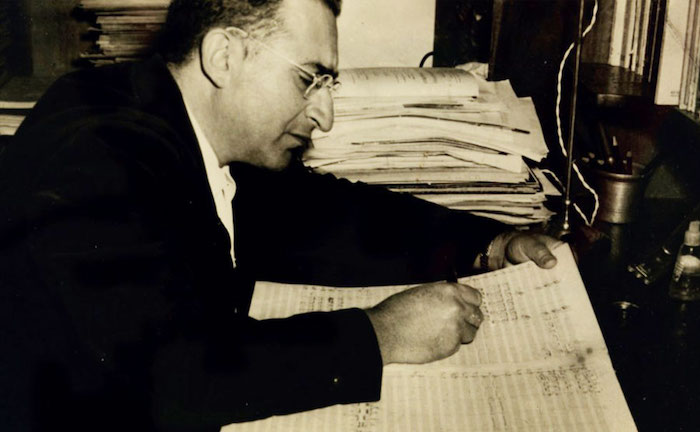
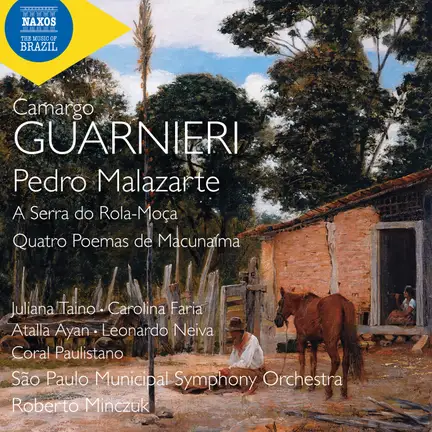
Mozart Camargo Guarnieri [1907-1993] He was born in Tietê, São Paulo, and registered at birth as Mozart Guarnieri, but when he began a musical career, he decided his first name was too pretentious. Thus he adopted his mother's maiden name Camargo as a middle name, and thenceforth signed himself M. Camargo Guarnieri. In 1948, he legally changed his name to Mozart Camargo Guarnieri, but continued to sign only the initial of his first name. Guarnieri studied piano with Ernani Braga and Antonio de Sá Pereira and composition with Lamberto Baldi at the Conservatório Dramático e Musical de São Paulo. In 1938, a fellowship from the Council of Artistic Orientation allowed him to travel to Paris, where he studied composition and aesthetics with Charles Koechlin and conducting with François Ruhlmann. Some of his compositions received important prizes in the United States in the 1940s, giving Guarnieri the opportunity of conducting them in New York, Boston, Los Angeles and Chicago. A distinguished figure of the Brazilian national school, he served in several capacities; conductor of the São Paulo Orchestra, member of the Academia Brasileira de Música, and Director of the São Paulo Conservatório, where he taught composition and orchestral conducting. In 1936 he was the first conductor of the Coral Paulistano choir. His œuvre comprises symphonies, concertos, cantatas, two operas, chamber music, many piano pieces, and over fifty songs. In 1972, in Porto Alegre, his compatriot Roberto Szidon gave the first performance of the Piano Concerto No. 4. In 1962 the Soviet Union invited him to participate in the third Congress of Composers in Moscow. Shortly before his death in São Paulo in 1993, he was awarded the Gabriela Mistral Prize by the Organization of American States as the greatest contemporary composer of the Americas.

Wikipedia

Pedro Malazarte, ópera cómica en un acto [1952]. Às ordens, companheiro.

Imagen

_________________
Imagen


Arriba
 Perfil  
 
 Asunto: Re: La otra ópera
NotaPublicado: 03 Jul 2026 11:32 
Desconectado
Div@
Div@
Avatar de Usuario

Registrado: 05 Oct 2005 20:42
Mensajes: 3034
Imagen

Gavin Bryars [*1943] He was born in Goole, a port town in Yorkshire. His first musical reputation was as a jazz bassist working in the early ’60s with Derek Bailey and Tony Oxley. He abandoned improvisation in 1966, his distaste for the practice being laid out in Bailey’s Improvisation [1980]. Afterwards he went to the United States, working alongside composers such as John Cage, Cornelius Cardew, John White. Some of Bryars’ most significant early works were published by Obscure, a record label started by Brian Eno that ran from 1975 to 1978. His most famous early works are The Sinking of the Titanic [1969] and Jesus' Blood Never Failed Me Yet [1971]. Bryars has also composed prolifically for theater and dance, and has written five full-length operas along with countless other pieces throughout the past 50+ years of his career. Some of his compositions will be performed by the Phaedra Ensemble in a series of shows titled Gavin Bryars at 80: Stringworks, which will take place across the next few months. Joshua Minsoo Kim talked with Bryars on September 23rd, 2023 to discuss his hometown Goole, performing with his children, the Obscure label, and the longevity of his most renowned works.

Tone Glow

Marilyn Forever, ópera [2013]. Last Night, After the Lights Were Out.

Imagen

The Collected Works of Billy the Kid, opera de cámara [2018]. Cross a River.

Imagen

_________________
Imagen


Arriba
 Perfil  
 
 Asunto: Re: La otra ópera
NotaPublicado: 10 Jul 2026 12:47 
Desconectado
Div@
Div@
Avatar de Usuario

Registrado: 05 Oct 2005 20:42
Mensajes: 3034
Imagen

Gaetano Andreozzi [1755-1826] He was born in Aversa. He studied singing, harmony and counterpoint with Fenaroli and P.A. Gallo at the Conservatorio di S Maria di Loreto, Naples. He was called ‘Jommellini’ after his maternal uncle, Niccolò Jommelli, with whom he also studied. Following his début work, the oratorio Giefte [1779, Rome], he established himself as a regular contributor of comic operas for Florence and Venice, but he did not write an opera seria for Venice until 1788. After Carnival 1784 he travelled to St Petersburg, where his Didone abbandonata was performed [MooserA]. During his visit he may also have written Giasone e Medea [Florimo], though he must soon have been back in Naples, for he wrote an opera for Carnival 1785. The following spring he was again in Florence, where he married his student, the soprano Anna de Santi [b Florence, c1772; d nr Dresden, 2 June 1802]. She had made her début as prima donna at the Teatro S Benedetto in Venice during the carnival season of 1786 and thereafter pursued a successful career, occasionally as the principal in her husband’s operas. As well as singing in many Italian operatic centres including Naples and Palermo, she appeared for a season in Madrid [May–December 1791].

In 1786 Andreozzi wrote his first version of Catone in Utica, which enjoyed a number of revivals. Equally successful was his Agesilao [1788, Venice], which established his reputation as a composer of opera seria; thereafter his serious operas outnumber his comic works by more than three to one. For the next seven years he wrote operas on new texts by all the most important librettists of the period and for all the major operatic centres. He was also invited to revise successful operas by others. For most of his career he worked in northern Italy, returning frequently to Naples to compose operas. Beginning in 1790, he was called upon to write an occasional carnival opera for Rome. He also probably accompanied his wife on her Madrid trip, during which his Angelica e Medoro and Didone abbandonata were given at the Caños del Peral, although there is no evidence to support Fétis’s claim that Andreozzi wrote a new opera for the city, Gustavo, re di Svezia. His Lenten opera, Saulle [1794, Naples], enjoyed numerous revivals throughout the first decade of the 19th century.

Andreozzi was a skilled and original composer. He often contrasted wind and string sonorities and used solo instruments in dialogue or to provide obbligato embellishment or a simple countermelody to the voice. The English horn, clarinet and bassoon, as well as horns and oboes, heighten the effect of obbligato recitatives. His lean accompaniments often take the form of motivic, rhythmic or syncopated beat-keeping, using arpeggiated, oscillating or repeated note figures. Simple string accompaniment for the vocal phrases are in strong contrast with motivic tutti commentaries in orchestral passages and ritornellos. Andreozzi often establishes a dialogue between voice and orchestra, and occasional examples of motivic, textural or harmonic word-painting can be found. Andreozzi’s prominent use of wind instruments, crescendo passages, chromaticism, modality and disguised recapitulations, as well as his tonally unified scene complexes, all point to Jommelli’s influence.

Grove

Arbace, dramma per musica [1781]. Aria: Non fareste ombre di morte.

Imagen

_________________
Imagen


Arriba
 Perfil  
 
 Asunto: Re: La otra ópera
NotaPublicado: 17 Jul 2026 15:08 
Desconectado
Div@
Div@
Avatar de Usuario

Registrado: 05 Oct 2005 20:42
Mensajes: 3034
Imagen

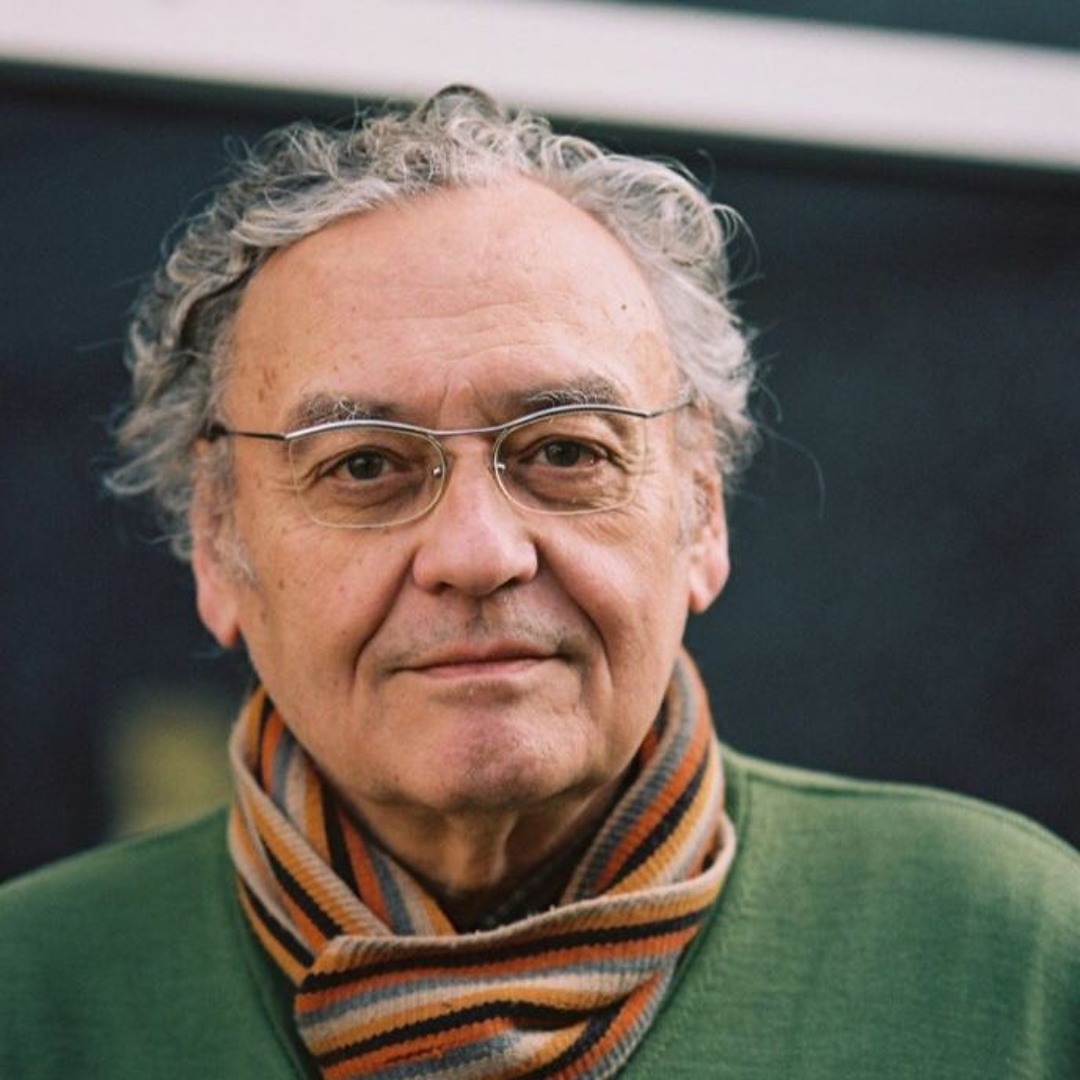
Gerd Kühr [*1952] He was born in Maria Luggau, Kärnten. Kühr studied composition at the Mozarteum Salzburg under Josef Friedrich Doppelbauer and Hans Werner Henze in Cologne, and also studied conducting with Gerhard Wimberger (Mozarteum) and Sergiu Celibidache. From 1992 to 1994, Gerd Kühr was guest professor for composition at the Mozarteum and from 1994 in Graz. In 1995, he became a tenured professor for composition and music theory at the University of Music and Performing Arts, Graz. Gerd Kühr works and lives in Austria und Berlin.

Stallerhof, ópera en tres actos [1986-1987]. Acto tercero, segunda escena: Abend in der Stube.

Imagen

_________________
Imagen


Arriba
 Perfil  
 
 Asunto: Re: La otra ópera
NotaPublicado: 24 Jul 2026 13:58 
Desconectado
Div@
Div@
Avatar de Usuario

Registrado: 05 Oct 2005 20:42
Mensajes: 3034
Imagen

David T. Little [*1978] Raised in Blairstown, New Jersey, Little attended North Warren Regional High School, where he performed in school musicals. Little's music has been performed throughout the world—including in Dresden, London, Leipzig, Edinburgh, Zürich, San Francisco, Chicago, Los Angeles, Montreal, and at the Tanglewood, Aspen, MATA, Cabrillo and Holland Festivals—by such performers as the London Sinfonietta, Alarm Will Sound, eighth blackbird, So Percussion, wild Up, ensemble courage, Dither, NOW Ensemble, PRISM Quartet, the New World Symphony, Third Coast Percussion, Beth Morrison Projects, Peak Performances, American Opera Projects, the New York City Opera, the Grand Rapids Symphony and the Baltimore Symphony Orchestra under Marin Alsop. He has received awards and recognition from the American Academy of Arts and Letters, the Mid Atlantic Arts Foundation, Meet The Composer, the American Music Center, the Harvey Gaul Competition, BMI, and ASCAP, and has received commissions from Carnegie Hall, Kronos Quartet, Maya Beiser, the Baltimore Symphony, the Albany Symphony Orchestra, the New World Symphony, Pittsburgh New Music Ensemble, the University of Michigan, and Dawn Upshaw's Vocal Arts program at the Bard College Conservatory of Music, among others.

Wikipedia

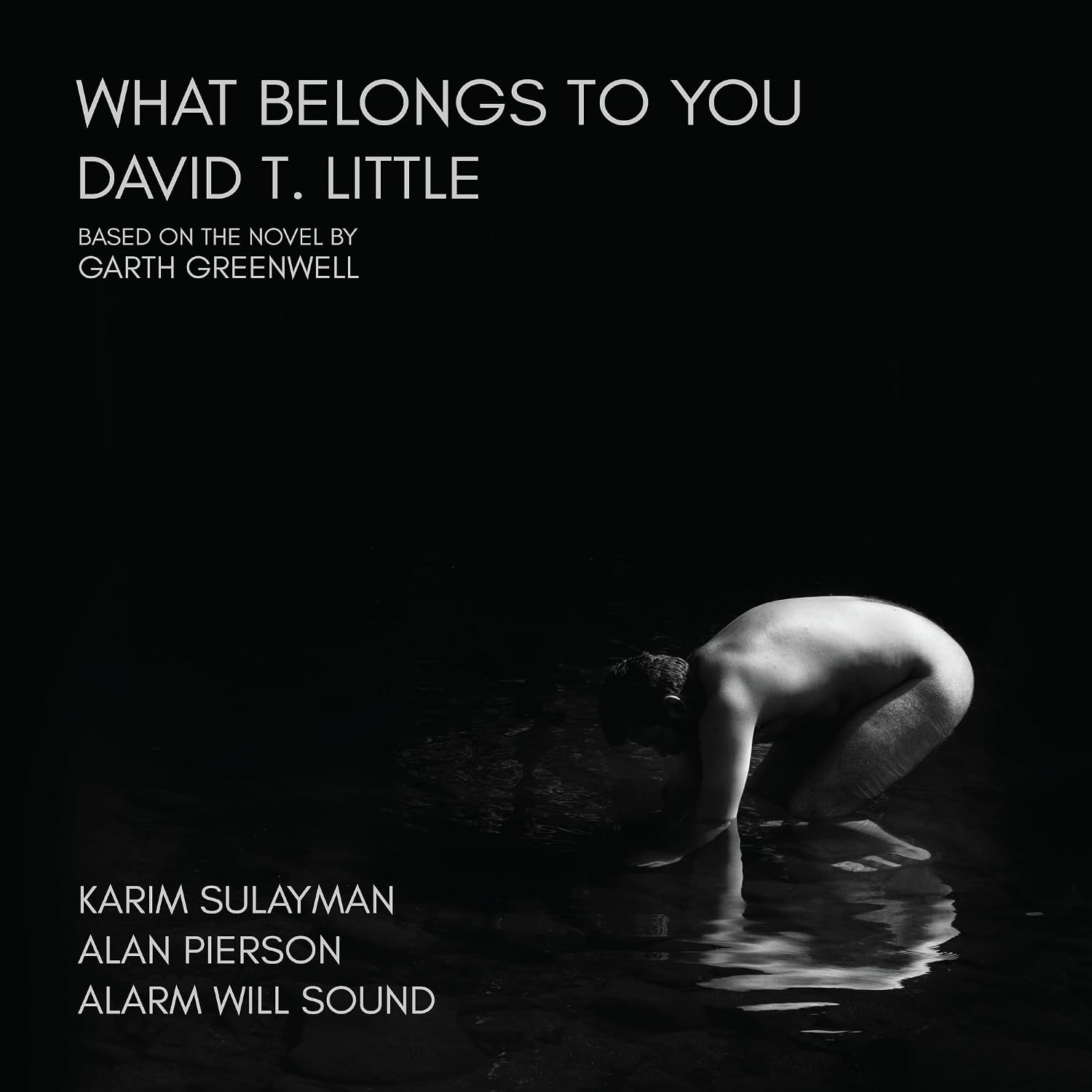
What Belongs to You, ópera en tres actos [2024]. Fragmento.

Imagen

_________________
Imagen


Arriba
 Perfil  
 
 Asunto: Re: La otra ópera
NotaPublicado: 31 Jul 2026 9:52 
Desconectado
Div@
Div@
Avatar de Usuario

Registrado: 05 Oct 2005 20:42
Mensajes: 3034
Imagen

Walter Zimmermann [*1949] Born in Schwabach, Germany, Zimmermann studied composition in Germany with Werner Heider and Mauricio Kagel, the theory of musical intelligence at the Institute of Sonology in Utrecht [now located in The Hague], and computer music at Colgate University in New York. Zimmermann's works are infused by a personal adaptation of minimal technique. Whereas many early American minimalist composers were influenced in their works by rock music, jazz, and world musics, Zimmermann has drawn a great deal of inspiration from his Franconian heritage. A number of his works, particularly his groups of pieces known as Lokale Musik, use the traditional music of this area as source material. These works frequently begin with melodic material derived from Franconian folk songs, which are rearranged and transformed in novel ways.

Wikipedia

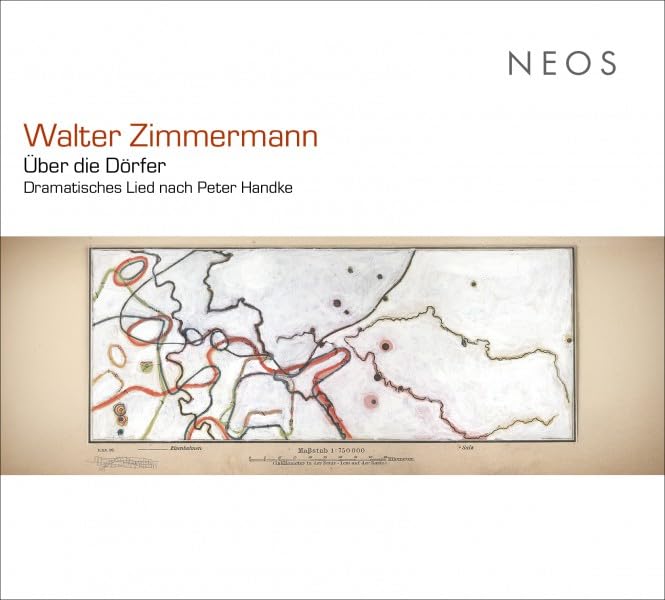
Über die Dörfer, Dramatisches Lied [1981/1986-2025]. Fragmento.

Imagen

_________________
Imagen


Arriba
 Perfil  
 
 Asunto: Re: La otra ópera
NotaPublicado: 07 Ago 2026 9:32 
Desconectado
Div@
Div@
Avatar de Usuario

Registrado: 05 Oct 2005 20:42
Mensajes: 3034
Imagen

Andrés Gaos Berea [1874-1959] Nació en La Coruña. Cuando contaba con pocos meses, su familia se traslada a la ciudad de Vigo, en donde su padre establecerá una sucursal de la tienda de música Canuto Berea, tío materno del niño. Desde muy pequeño, Gaos pasará largas horas en este establecimiento, siendo el encargado de tocar el repertorio que los clientes querían comprar y estudiando violín y piano, instrumento que también llegará a tocar con gran solvencia. Considerado por la prensa como un niño prodigio, las críticas de sus conciertos se vuelven habituales en la prensa gallega ya desde 1883, cuando presenta su primer concierto en la ciudad de Vigo. A partir de entonces se siguen presentaciones en La Coruña, Ferrol y Vigo y son tan memorables que hasta la prensa de la Habana los reseña en alguna ocasión en que su actuación le vale un premio extraordinario. A los doce años es becado por la Diputación de la Coruña para realizar estudios en el Conservatorio de Madrid, con el famoso violinista Jesús de Monasterio y posteriormente pasa a perfeccionarse en París y Bruselas, en donde también estudiará composición y será alumno de Eugène Ysaÿe, conocido como “el rey del violín”.

Con apenas 20 años, hará su primera gira por América, para terminar instalándose finalmente en Argentina en 1895. En este país desarrollará una importante actividad educativa [llegó a crear su propio conservatorio en 1904], interpretativa [como solista y con su cuarteto], como director de orquesta [entre otras cosas fue el director de la orquesta que representó a Argentina en la exposición de París de 1937] y compositiva. Si bien su ciudad de residencia será Buenos Aires, realiza giras constantes por diferentes países americanos [Estados Unidos, Cuba, Montevideo, México, en algunas de las cuales participa con Saint-Säens] y europeos [Francia, Bélgica, Portugal, Italia, Rusia]. Tanto la prensa extranjera como la española lo consideran el mayor representante de la escuela española de violín y lo llaman habitualmente el “Sarasate del porvenir”. De especial importancia es la “tournée” que realiza por Europa entre 1925 y 1932 y en la que actúa en buena parte de España, de lo que se deja constancia en la prensa de más de 20 ciudades. Caben destacar las buenas críticas que recibe de músicos tan importantes como Joaquín Turina o las del propio Adolfo Salazar quien, desde su columna de El Sol alaba a Gaos no ya como intérprete, sino sobre todo por su actividad compositiva de la que señala que es de “altos vuelos e interés… especialmente la sonata para piano y violín”.

Organistrum

Amor vedado, ópera en un acto y siete escenas [1916]. Escena cuarta.

Imagen

_________________
Imagen


Arriba
 Perfil  
 
 Asunto: Re: La otra ópera
NotaPublicado: 14 Ago 2026 10:33 
Desconectado
Div@
Div@
Avatar de Usuario

Registrado: 05 Oct 2005 20:42
Mensajes: 3034
Imagen

Girolamo Giacobbi [1567-1628] He was born in Bologna. Giacobbi was closely associated with the basilica of S Petronio, Bologna, where he began his career as a choirboy in 1581, becoming a paid singer in 1584. He was an assistant [promagister] to the maestro di cappella from 1595 and was himself maestro from 18 August 1604 to 1628, when he resigned because of a serious illness. From February to April 1618 he was also maestro di cappella of the new Oratorio dei Filippini, Bologna, and from 1625 to 1628 he directed the choir at S Giovanni in Monte. A close friend of Banchieri, he was an active member of the Bolognese Accademia dei Floridi, which Banchieri had founded in 1614. In 1625 it took the new name of Accademia dei Filomusi and met in Giacobbi's house until it was disbanded in 1630; on 13 June 1620 it was visited by Monteverdi. Reference to Giacobbi's death is made in a letter from Banchieri to Monteverdi.

Giacobbi was one of the first composers outside Florence to write in the new monodic style. In 1605 he composed four intermedi for the pastoral play Il Filarmindo by Count Ridolfo Campeggi. The intermedi were published in 1608 as L'Aurora ingannata in the several editions of the libretto, but the music was published under the title of Dramatodia. The recitatives are in an intense, pathetic style reminiscent of Jacopo Peri's Euridice, and they alternate with short ensembles and strophic, homophonic choruses. In 1613 Giacobbi wrote the music for new intermedi, called Proserpina rapita, for the same play. In his sacred music he displayed both conservative and progressive features. The motets of 1601 are fluently composed in the late Renaissance idiom of Palestrina, with a sensitive awareness of tonal balance and contrast in those for two choirs. The concerted vesper psalms of 1609 are influenced by the more recent innovations of the Venetians. Written in long continuous sections, with organ continuo, they are expressive and dramatic in character, with frequent changes of scoring and tone colour. In a preface Giacobbi gave instructions and suggestions regarding the disposition of the choirs, soloists and instrumentalists.

Grove

Dramatodia overo canti rappresentativi sopra L’Aurora ingannata, favoletta per gli intermedi in musica [1605]. Intermedio II.

Imagen

_________________
Imagen


Arriba
 Perfil  
 
 Asunto: Re: La otra ópera
NotaPublicado: 21 Ago 2026 13:44 
Desconectado
Div@
Div@
Avatar de Usuario

Registrado: 05 Oct 2005 20:42
Mensajes: 3034
Imagen

Gösta Nystroem [1890-1966] He was born in Silvberg, Sweden, a parish in the province of Dalarna, but spent most of his childhood in Österhaninge near Stockholm, at the time a small village but nowadays a suburban district. The son of a headmaster, organist, amateur painter and botanist. His father encouraged him to play the piano and gave him lessons in harmony and composition; until he was 11 he sang in the church choir, and from the age of 12 he deputized for his father as organist. At 15 he began private piano and harmony studies with Lundberg and Bergenson in Stockholm, and in the next year, after he had been refused admission to the conservatory, he studied in Strängnäs to become a primary-school teacher. He was able to study at the Swedish Royal Academy of Music in 1913–1914, while taking private composition lessons from Hallén, but he was discontented there and went to Copenhagen, where he studied painting and composition for four years. After brief music studies in Germany he went to Paris in 1920, and there he remained for 12 years in the company of Scandinavian and French artists. He had lessons in composition and instrumentation from d’Indy and Sabaneyev and in conducting from Chevillard. After his return to Sweden he became a pugnacious music critic for the Göteborgs Handels- och sjöfartstidning [1932–1947]. He made painting trips along the Mediterranean coasts of Spain and France, and he held exhibitions in Copenhagen, Stockholm and Paris. Apart from his father, the greatest influences to which he admitted were from painters: Piero della Francesca, Braque and Adrian-Nilsson.

Grove

Herr Arnes penningar, opera [1958]. Aria: Om intet jag såge. Aria: I vilket elände har du dragit mig in.

Imagen

_________________
Imagen


Arriba
 Perfil  
 
 Asunto: Re: La otra ópera
NotaPublicado: 28 Ago 2026 20:34 
Desconectado
Div@
Div@
Avatar de Usuario

Registrado: 05 Oct 2005 20:42
Mensajes: 3034
Imagen

Louis Lacoste [De La Coste] [c. 1675–c. 1750] The two versions of his name are found in anthologies and on title-pages of his opera scores, but exemplars of the printed editions of Télégone, Orion and Biblis at Toulouse bear the autograph signature ‘Lacoste’. He was a chorus member at the Opéra and is included in the register of musicians employed there in 1704 [see La Gorce]. He introduced himself in the preface to his ballet Aricie [1697] as ‘a man who writes only songs’ [alluding to his airs sérieux et à boire published in the Ballard anthologies], not yet capable of more ambitious compositions. A document published by Campardon in 1701 reveals that he was involved in an adulterous affair with the wife of a watch maker who, on the indictment of her husband, was confined in a hospice. Lacoste is described in the document as a ‘musicien de l’opéra’.

Lacoste found fame with the success of his tragedy Philomèle on 20 October 1705 [it was revived in 1709, 1723 and 1734], but this success was overshadowed two years later by the bruising failure of Bradamante. A new tragedy, Créuse l’Athénienne [April 1712] does not seem to have been well received, a failure confirmed by the absence of a revival. The following year Lacoste was named batteur de mesure [orchestral conductor] at the Opéra, and a year later maître de musique. In 1715 a new document published by Campardon shows him seeking to marry a singer at the Opéra, Madeleine Pasquier, ‘with her mother’s agreement’, but an argument with the singer’s father put an end to it. On 8 July 1717 he was dismissed from his post of maître de musique for some unknown reason and replaced by François Blouquier. Another document, dated 6 July 1720, is a ‘three-year concession for the exclusive privilege of staging operas in the town of Lille … to Louis De La Coste, merchant, and Marie Catherine Robert his wife residing in Lille’, but the title of merchant attributed to Lacoste makes the interpretation of this text uncertain. The title-page of the score of Télégone [1725] reads ‘by M. Lacoste of the Académie Royale de Musique’, and the Mercure de France of March 1728 [in a review of Orion] describes the composer as maître de chant at the same institution. He seems to have retained this position at least until the première of his last opera, Biblis, in 1732. After that we lose all trace of Lacoste. Antoine de Léris, in his Dictionnaire portatif [Paris, 1754, but completed, according to the author, in 1749] spoke of him as a ‘musician who died some years ago’.

Grove

Philomèle, tragédie en musique [1705]. Ah! Quand reviendront nos beaux jours?

Imagen

_________________
Imagen


Arriba
 Perfil  
 
 Asunto: Re: La otra ópera
NotaPublicado: 04 Sep 2026 20:12 
Desconectado
Div@
Div@
Avatar de Usuario

Registrado: 05 Oct 2005 20:42
Mensajes: 3034
Imagen

Amen Feizabadi [*1983] He was born in Tehran. Feizabadi is a filmmaker, composer and producer who lives and works between Tehran and Berlin. He first studied laboratory science at Beheshti Medical University in Iran, then photography and classical music sound at the University of Arts in Tehran. In 2009, he went to Germany and studied integrative visualisation and score composition at Folkwang University of the Arts in Essen. He completed his interdisciplinary master’s degree at the same university and in Berlin. He has received several awards and scholarships in recent years, including the working scholarship from the Berlin Senate 2022. In 2019 he founded the Collective TAN – IN طن این, where the focus is on cinematic and theatrical elements that concentrate on a transnational and interdisciplinary context beyond post-colonialist tendencies.

International Film Festival Rotterdam

Deep Siesta, ópera de cámara en tres actos y un prólogo [2024-2026]. Konflikt und Akzeptanz.

Imagen

_________________
Imagen


Arriba
 Perfil  
 
 Asunto: Re: La otra ópera
NotaPublicado: 11 Sep 2026 12:56 
Desconectado
Div@
Div@
Avatar de Usuario

Registrado: 05 Oct 2005 20:42
Mensajes: 3034
Imagen

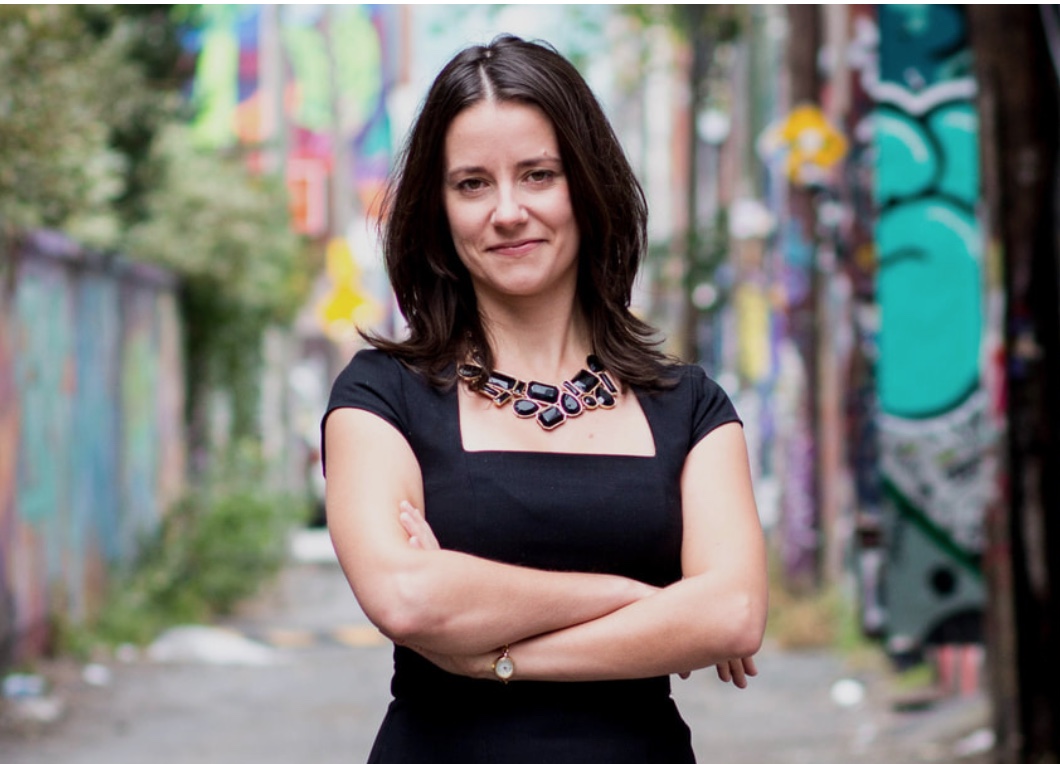
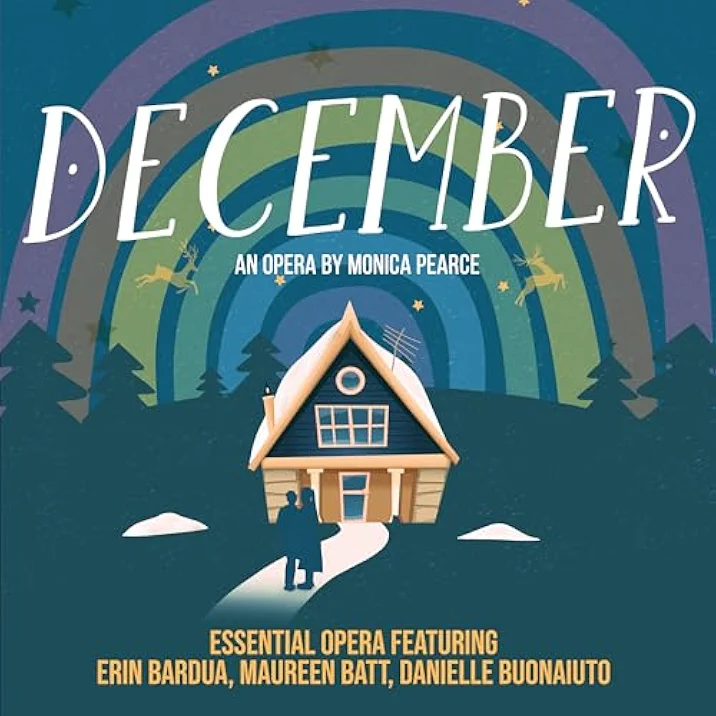
Monica Pearce [*1984] originally from Prince Edward Island, is a composer of new classical/contemporary music with a particular affinity for solo and chamber music, opera, and electronics. After completing her Bachelor of Music at Mount Allison University with a focus on piano and composition, studying with David Rogosin [piano] and Ian Crutchley and James Code [composition], Monica completed her Masters of Music in Composition at the University of Toronto with the mentorship of Alexander Rapoport and Gary Kulesha. She currently studies composition independently with Linda Catlin Smith. Monica co-founded the emerging composer collective the Toy Piano Composers in 2008 with Chris Thornborrow, where they, along with Elisha Denburg, are the Artistic Directors. The Toy Piano Composers are currently in their eighth season and have presented over 100 new works in 22 concerts, with support from the Ontario Arts Council, Toronto Arts Council and the SOCAN Foundation.

schmopera

Cake, operetta [2011]. I Want, I Want, I Want.

Aunt Helen, ópera [2012]. Thank You for the Invitation.

April, ópera en un acto [2016]. Biking on the Don Valley.

Imagen

Etiquette, ópera en un acto [2014/2021]. It Is Restful in a Book of Rules.

Imagen

December, ópera en un acto [2019]. Customer Service.

Imagen

_________________
Imagen


Arriba
 Perfil  
 
Mostrar mensajes previos:  Ordenar por  
Nuevo tema Responder al tema  [ 1636 mensajes ]  Ir a página Anterior  1 ... 106, 107, 108, 109, 110  Siguiente

Todos los horarios son UTC + 1 hora [ DST ]


¿Quién está conectado?

Usuarios navegando por este Foro: Google [Bot] y 60 invitados

No puede abrir nuevos temas en este Foro
No puede responder a temas en este Foro
No puede editar sus mensajes en este Foro
No puede borrar sus mensajes en este Foro


Powered by phpBB © 2000, 2002, 2005, 2007 phpBB Group
Traducción al español por Huan Manwë para phpbb-es.com