Fecha actual 24 Sep 2026 23:13

Todos los horarios son UTC + 1 hora [ DST ]


Nuevo tema Responder al tema  [ 1636 mensajes ]  Ir a página Anterior  1 ... 104, 105, 106, 107, 108, 109, 110  Siguiente
Autor Mensaje
 Asunto: Re: La otra ópera
NotaPublicado: 30 Ene 2026 12:22 
Desconectado
Div@
Div@
Avatar de Usuario

Registrado: 05 Oct 2005 20:42
Mensajes: 3034
Imagen

Joseph François Salomon [1649-1732] He was born in Toulon, Provence. According to La Borde he was a master of the viol and a pupil of Sainte-Colombe. He received his early musical training at the metropolitan church of St Sauveur in Aix-en-Provence, where he was a chorister from 1657 and later sub-deacon (1666) and organist (1669) when G. Poitevin was maître de chapelle. He abandoned his ecclesiastical career in 1671 and left Aix-en-Provence. From 1679 he was at court in Versailles as harpsichordist and organist to Queen Marie Thérèse and viol player in the king’s chamber music from 1713 (perhaps from 1706) until 1720 or 1727. In 1683 he entered the competition held by Louis XIV to replace Du Mont and Robert as sous-maître de chapelle of the royal chapel and got through to the second round. His operas, Medée et Jason and Théonoé, are in the tradition of Lully and Campra, while his published motets show the influence of Bernier’s Italianate style.

Grove

Médée et Jason, tragédie en musique [1713]. Prólogo, Escena 1: Jupiter, lancez le tonnerre.

Imagen

_________________
Imagen


Última edición por Zelenka el 18 Jun 2026 15:58, editado 1 vez en total

Arriba
 Perfil  
 
 Asunto: Re: La otra ópera
NotaPublicado: 06 Feb 2026 12:51 
Desconectado
Div@
Div@
Avatar de Usuario

Registrado: 05 Oct 2005 20:42
Mensajes: 3034
Imagen

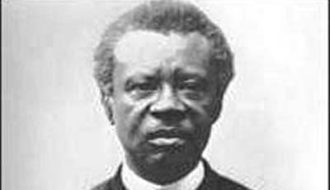
Edmond Dédé [1827-1901] He was born in New Orleans, Louisiana, his mother was the fourth generation of a free family of that city. His father was a marketman, poultry dealer, and music teacher who had migrated from French Caribbean colonies to New Orleans in 1809 after the Haitian Revolution where his father was a militia unit bandmaster. As a boy, Dédé first learned the clarinet, but soon switched to the violin, on which he was considered a prodigy. He later performed compositions of his own as well as those by Rodolphe Kreutzer, a favorite composer of his. Dédé's teachers in his youth included violinists Constantin Debergue and Italian-born Ludovico Gabici, who was the director of the St. Charles Theater Orchestra. He was taught music theory by Eugène Prévost and New York-born black musician Charles-Richard Lambert, the father of Sidney and Charles Lucien Lambert. Dédé's instruction from Gabici ended in 1848 when Dédé moved to Mexico in search of work. He returned to the US at the end of 1852 and worked as a cigar maker. In 1855, his savings financed a trip to Europe, where he visited Paris and then Belgium, where he helped his friend Joseph Tinchant set up a branch of the Tinchant family's cigar business. He returned to Paris around 1857 and took lessons at the Paris Conservatoire, studying at the Conservatoire with Jean-Delphin Alard and Fromental Halévy.

Dédé held the conductor's title at the theater in Bourges for several years, and then moved to Bordeaux in 1864 to take up a position as assistant conductor for the ballet at the Grand Théâtre. Within a few years, he found employment at the Théâtre l'Alcazar, a popular concert café in the city. Later in the 1870s, he moved to the Folies Bordelaises. Throughout, Dédé continued to compose art music as well as pieces in a more popular idiom suited to the city's other music venues. Samuel Snäer Jr. [1835–1900], an African-American conductor and musician, conducted the first performance of Dédé's Quasimodo Symphony on May 10, 1865, in the New Orleans Theater to a large audience of prominent free people of color of New Orleans and Northern whites. In announcing the concert, the New Orleans Tribune described Dédé as "our well-known fellow citizen" and reported that the work had been "enthusiastically received" in France. Dédé returned to New Orleans only once, in 1893. When he reached New Orleans, he participated in three benefit concerts held in his honor. New Orleans' musical innovators and musical elite, including Jelly Roll Morton's teacher, William J. Nickerson, took part in these concerts. In the course of his visit, he was made an honorary member of the Société des Jeunes-Amis, a Black fraternal organization.

Wikipedia

Morgiane, ou, le Sultan d'Ispahan, ópera en cuatro actos [1887]. Ils sont jaloux, je connais la race.

Imagen

_________________
Imagen


Arriba
 Perfil  
 
 Asunto: Re: La otra ópera
NotaPublicado: 13 Feb 2026 1:20 
Desconectado
Div@
Div@
Avatar de Usuario

Registrado: 05 Oct 2005 20:42
Mensajes: 3034
Imagen

Paweł Łukaszewski [1968] He was born in Częstochowa. His father was the composer Wojciech Łukaszewski. He is the brother of the composer Marcin Łukaszewski. Regarding Łukaszewski's musical style, acclaimed Polish music scholar Adrian Thomas states, "Paweł Łukaszewski [is] best known for his resolutely anti-modern sacred choral music." Also an active conductor, Łukaszewski is Artistic Director and Conductor of the Musica Sacra choir in Warsaw. His works have been recorded on more than 50 CD albums. Łukaszewski was the composer-in-residence of the Warsaw Philharmonic in 2011/2012. He is currently a composition professor at the Fryderyk Chopin University of Music and Szczecin Academy of Art. As a composer his music has appeared on 4 CDs that have won a Fryderyk Award: 1999, 2008, 2011, and 2016. His music was nominated in 2001, 2002, 2003, 2004 and 2005. As the conductor of Musica Sacra he has won the Fryderyk Award three times: in 2005, 2011, and 2016.

Wikipedia

Joasz - Król judzki, ópera en dos actos [2024]. Tak jest, mówiłem ci to.

Imagen

_________________
Imagen


Arriba
 Perfil  
 
 Asunto: Re: La otra ópera
NotaPublicado: 20 Feb 2026 14:15 
Desconectado
Div@
Div@
Avatar de Usuario

Registrado: 05 Oct 2005 20:42
Mensajes: 3034
Imagen

Charles Arnould Tournemire [1870-1939] Born in Bordeaux, Tournemire moved in adolescence to Paris, and there became one of César Franck's three youngest students [the other two were Henri Büsser and a Belgian, Guillaume Lekeu, the latter having been born only two days before Tournemire]. From 1898 [on the resignation of Gabriel Pierné] to 1939, Tournemire served as the organiste titulaire at Franck's old church, the Basilique Ste-Clotilde, Paris. He was also professor of chamber music at the Paris Conservatoire. In 1931, he published a biography of Franck. A year before the biography appeared, Tournemire recorded five organ improvisations, which were later transcribed by Maurice Duruflé from phonograph recordings. Of ten 78-rpm discs which Tournemire made in 1930, playing the Aristide Cavaillé-Coll organ of Sainte-Clotilde, five contain compositions by Franck. This set of discs was awarded the Grand Prix du Disque in 1931 and has been reissued on both LP and CD.

Insofar as Tournemire's name is now remembered, it is usually spoken of in connection with his largest composition, L'Orgue mystique, a group of 51 sets of five pieces each [except for Holy Saturday, which contains only three pieces], all written between 1927 and 1932. This collection covers the cycle of the Roman Catholic liturgical year, each set being based on the Gregorian chants for the day. Unlike the symphonies of Charles-Marie Widor, which are usually heard in secular recitals [even when individual movements of these symphonies had liturgical origins], L'Orgue mystique was designed for church use. Tournemire died in Arcachon, France, in 1939. The precise cause of his death is uncertain. All that is known is he left his house on October 31 for a walk and never returned. His body was found in a bog in Arcachon, a fair distance from where he left, on November 4 and he was presumed to have died on November 3 or 4.

Wikipedia

La Légende de Tristan, ópera en tres actos y ocho cuadros [1926]. Le Cheveu d'or.

Imagen

_________________
Imagen


Arriba
 Perfil  
 
 Asunto: Re: La otra ópera
NotaPublicado: 27 Feb 2026 14:45 
Desconectado
Div@
Div@
Avatar de Usuario

Registrado: 05 Oct 2005 20:42
Mensajes: 3034
Imagen

Carl Wilhelm Eugen Stenhammar [1871-1927] He was born in Stockholm to Per Ulrik Stenhammar and Louise Rudenschöld. His older brother was the architect Ernst Stenhammar. He demonstrated a talent for music at an early age, both as pianist and composer, writing piano sonatas and songs during his teenage years. He received his first musical education in Stockholm, where his teachers included Emil Sjögren and Andreas Hallén. In the autumn of 1892, he moved to Berlin for seven months to study with Karl Heinrich Barth, where he devoted his time to rigorous piano practice and composition. Barth was satisfied with Stenhammar's progress and gave him increasingly technically challenging pieces to practice, such as the Variations on a Theme of Paganini by Johannes Brahms, a composer he admired. Stenhammar's breakthrough as both composer and pianist came with the premiere of his Piano Concerto no. 1 in B minor, Op. 1, in Stockholm on 17 March 1894, with the composer himself as soloist. The music scholar Bo Wallner has described this concert as a milestone in Swedish music history. The resultant critical acclaim led to invitations for concert performances in Denmark, England and Germany, effectively launching Stenhammar's career as an internationally renowned concert pianist. He subsequently recorded five piano rolls for Welte-Mignon on 21 September 1905.

As a composer, Stenhammar was initially influenced by German and Austrian music, especially that of Richard Wagner and Anton Bruckner. Stenhammar himself described the style of his First Symphony in F major as "idyllic Bruckner". He subsequently sought to liberate himself from this influence, with the goal of writing in a more "Nordic" style, looking to Carl Nielsen and Jean Sibelius for guidance. The latter's Symphony No. 2, especially, had a great effect on him, leading him to change his style and withdraw his own First Symphony from performance. A result of his search for a new style was Stenhammar's own Second Symphony in G minor, composed nearly twelve years after the First Symphony, which shows the influence of Nielsen, Sibelius and Franz Berwald among others. From 1906 to 1922 Stenhammar was Artistic Director and chief conductor of the Gothenburg Symphony Orchestra, the first full-time professional orchestra in Sweden. In this capacity, he organized many performances of music by contemporary Scandinavian composers. In 1909, he briefly held the position of director of music at Uppsala University, where he was succeeded the following year by Hugo Alfvén. After moving back to Stockholm in the early 1920s, he returned to touring despite his declining health.

Wikipedia

Gillet på Solhaug, ópera en tres actos [1892–1896]. Næsten er jeg bange for, det vil lidet hue jer.

Imagen

Tirfing, drama musical mitológico nórdico en dos catos, un preludio y un postludio [1897–1898]. Vad vill du min pojke.

Imagen

_________________
Imagen


Arriba
 Perfil  
 
 Asunto: Re: La otra ópera
NotaPublicado: 06 Mar 2026 11:01 
Desconectado
Div@
Div@
Avatar de Usuario

Registrado: 05 Oct 2005 20:42
Mensajes: 3034
Imagen

Jean-Baptiste Cardonne [1730-1792] Cardonne was born at Versailles, where his father was a member of the royal household. He became a royal page, but his musical talents were soon noticed and he received tuition from the composer Colin de Blamont. In 1745 he joined the choir of the royal chapel, where he also played the harpsichord. His first operatic piece, Amaryllis, premiered in 1752. Cardonne continued to enjoy the patronage of the royal family, writing harpsichord and vocal music for them. From 1768, he tried to establish a career as an opera composer. His lack of success led to his return to the court, where he became maître de la musique du roi [master of the King's music] in 1780. Nothing is known about Cardonne's life after the fall of King Louis XVI during the French Revolution in September 1792.

Wikipedia

Omphale, tragedia en música en cinco actos [1769]. Air et Choeur: Joignez tous vos voix. Duo et Choeur: Quel triomphe! quelle victoire!

Imagen

_________________
Imagen


Arriba
 Perfil  
 
 Asunto: Re: La otra ópera
NotaPublicado: 13 Mar 2026 11:52 
Desconectado
Div@
Div@
Avatar de Usuario

Registrado: 05 Oct 2005 20:42
Mensajes: 3034
Imagen

Sir Granville Ransome Bantock [1868-1946] He was born in London. His father was an eminent Scottish surgeon. His younger brother was the dramatist and film director Leedham Bantock. Granville Bantock was intended by his parents for the Indian Civil Service but he suffered poor health and initially turned to chemical engineering. At the age of 20, when he began studying composers' manuscripts, at South Kensington Museum Library, he was drawn into the musical world. His first teacher was Gordon Saunders at Trinity College of Music. In 1888, he entered the Royal Academy of Music where he studied harmony and composition with Frederick Corder winning the Macfarren Prize in the first year it was awarded. Early conducting engagements took him around the world with a musical comedy troupe. With his brother Leedham Bantock he wrote a couple of music hall songs which met with some success. He founded a music magazine, The New Quarterly Music Review, but this lasted only a few years. In 1897, he became conductor at the New Brighton Tower concerts, where he promoted the works of Joseph Holbrooke, Frederic Hymen Cowen, Charles Steggall, Edward German, Hubert Parry, Charles Villiers Stanford, Corder and others, frequently devoting whole concerts to a single composer. He was also conductor of the Liverpool Orchestral Society with which he premiered Delius's Brigg Fair on 18 January 1908. He became the principal of the Birmingham and Midland Institute school of music in 1900. He was a close friend of fellow composer Havergal Brian. He was Peyton Professor of Music at the University of Birmingham from 1908 to 1934 [in which post he succeeded Sir Edward Elgar]. In 1934, he was elected Chairman of the Corporation of Trinity College of Music in London. He was knighted in 1930. His students included Anthony Bernard, Lilian Elkington, Eric Fogg and Dorothy Howell.

Wikipedia

The Seal Woman, a Celtic Folk Opera [1924].1 - Ionn da, Ionn do… 2- Ho Dhilsead! To the Kyles and the ships o’ Dhiarmad!

Imagen

_________________
Imagen


Arriba
 Perfil  
 
 Asunto: Re: La otra ópera
NotaPublicado: 20 Mar 2026 12:48 
Desconectado
Div@
Div@
Avatar de Usuario

Registrado: 05 Oct 2005 20:42
Mensajes: 3034
Imagen

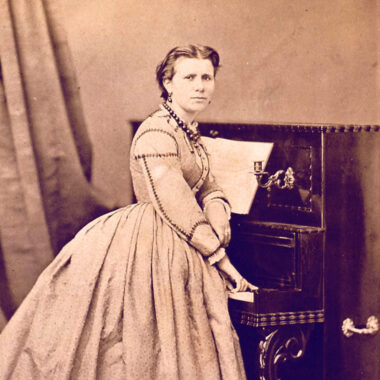
Clémence de Grandval [1828-1907] She was the youngest of four children, born into a well-to-do family in the Chateau de la Cour du Bois at Saint-Rémy-des-Monts. Her father was an Officier de la Légion d'honneur and a talented pianist, while her mother wrote and published stories. Her parents received many composers and artists, including Jean-Baptiste-Philémon de Cuvillon, Auguste-Joseph Franchomme, Louis-Nicolas Cary and Paul Scudo. At a very young age, she received composition lessons from composer and family friend Friedrich Flotow, and later studied with Frédéric Chopin. Because her family was wealthy, she was able to work as a composer without financial concerns. She married the Vicomte de Grandval and they had two daughters, Isabelle and Thérèse. She subsequently studied for two years with Camille Saint-Saëns [he dedicated his Oratorio de Noel to her], and continued to work as a composer after her marriage. However, her social position led her to publish several of her works under pseudonyms. These included Caroline Blangy, Clémence Valgrand, Maria Felicita de Reiset and Maria Reiset de Tesier.

Grandval was a vegetarian and a spiritualist, and for this was deemed eccentric. She performed her own compositions extensively; Cecile Chaminade also gave a performance consiting exclusively of Grandval's music. Grandval was the recipient of the inaugural Prix Rossini, winning in 1881 with her librettist Paul Collin. Her earliest works were sacred and performed in churches, but she went on to write a number of operas and various popular songs and instrumental works, including many pieces for oboe. Unfortunately, the orchestral scores of some of her pieces have been lost. During the 1870s, Grandval played a major role in the Société Nationale de Musique, and was the most played composer in this society. She also gave much money to the organisation. During the second part of the 19th century, she was a very popular composer who was admired by many critics. She died in Paris.

Wikipedia

Mazeppa, ópera en cinco actos y seis escenas [1892]. Les bluets sont bleus.

Imagen

_________________
Imagen


Arriba
 Perfil  
 
 Asunto: Re: La otra ópera
NotaPublicado: 27 Mar 2026 12:30 
Desconectado
Div@
Div@
Avatar de Usuario

Registrado: 05 Oct 2005 20:42
Mensajes: 3034
Imagen

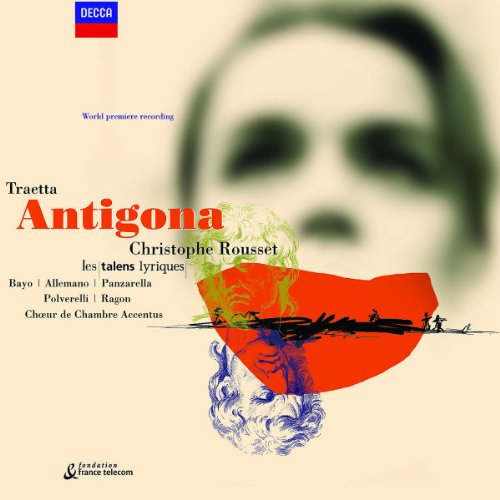
Tommaso Michele Francesco Saverio Traetta [1727-1779] He was born in Bitonto, a town near Bari. Traetta studied in Naples from 1738 to 1748 where he began his career, composing both comic and serious operas with librettos by Goldoni and Metastasio. The innovative phase of Traetta's career began in 1758 when he became maestro di capella at the Bourbon court of Parma. Under the intendant, Guillaume Du Tillot, he wrote several operas that anticipated the Viennese reform operas of Gluck and other attempts to unite French drama with modern Italian music. The first of these was Ippolito ed Aricia, which was influenced by the French composer Rameau. It contained scenes with chorus and ballet and combined solo and choral singing into elaborate movements whose forms resemble those of Gluck, though Traetta's music is more lyrical. Traetta created a type of Italian aria with a new degree of sensuous expression that placed him in the vanguard of young opera composers. The duke allowed him to fulfill commissions for other courts and between 1760 and 1763 he composed operas for Turin, Vienna and Mannheim. In Armida, composed in 1761 in Vienna, not only are many of the recitatives orchestrally accompanied, Traetta connected them to the beginnings of the set pieces as well as to their endings. His next opera, Sofonisba, composed in Mannheim in 1762, carried these advances further. This was Traetta's most symphonic opera; he wrote the ballet music and achieved grand scenic effects. His Ifigenia in Tauride, composed in 1763, intensified the bold advances made in Armida and Sofonisba. The opera was written one year after Gluck's Orfeo ed Euridice and was influenced by its predecessor. It became Traetta's best-known serious opera and was frequently revived. Declining funds for opera at Parma made it expedient for Traetta to accept the post of director of the Conservatorio dell'Ospedaletto at Venice in 1765. In this position he composed sacred music and wrote two comic operas, Le Serve Rivali and Amore in Trappola. In 1768 Traetta became musical director of the opera at the court of Catherine II of Russia. It was there in 1772 that he produced a major new work, Antigona, which is considered to be his masterpiece and the culmination of opera seria. Although the libretto by Coltellini has some mediocre plotting and dialog, it is mitigated by the force of Traetta's music. He leaped beyond the most adventurous aspects of his earlier tragedies with the repeated use of a few easily identified motifs, a technique later used by Benda and Mozart. Traetta went to Venice in ill-health during the summer of 1775. His last two completed works were comic operas for the Venetian carnivals of 1778 and 1779. By then he was already suffering from his final illness. When he died on April 6, 1779, he was a celebrated man and was buried with honors near the Ospedaletto.

The Kennedy Center

Buovo d'Antona, ópera en tres actos [1750?]. Aria: Venite, O Caro.

Imagen

Ifigenia in Tauride, ópera en tres actos [1763]. Aria: Stelle irate, il caro amico.

Imagen

Antigona, ópera en tres actos [1772]. Terceto: Ah de' tuoi re, tiranno.

Imagen

_________________
Imagen


Arriba
 Perfil  
 
 Asunto: Re: La otra ópera
NotaPublicado: 03 Abr 2026 12:02 
Desconectado
Div@
Div@
Avatar de Usuario

Registrado: 05 Oct 2005 20:42
Mensajes: 3034
Imagen

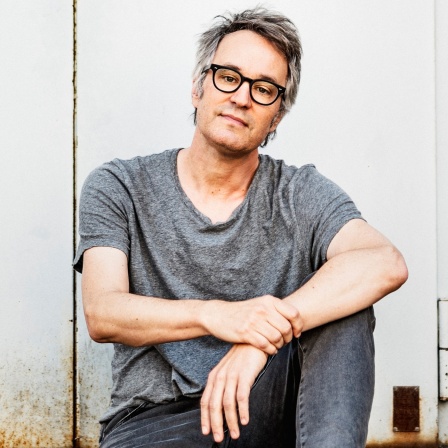
Hans Thomalla [*1975] He was born in Bonn, and studied composition at the Frankfurt University of Music and Performing Arts, Germany, from 1994 to 1999. From 1999 until 2002 he was assistant dramaturg at the Staatsoper Stuttgart (production dramaturg for Helmut Lachenmann Das Mädchen mit den Schwefelhölzern et al.). This was followed by graduate studies at Stanford University [California] with Brian Ferneyhough from 2002 until 2007. Since 2007 he is Associate Professor of Composition at Northwestern University in Chicago, where he also directs the Institute for New Music. Thomalla's compositions are featured at international festivals and institutions including Donaueschingen Festival, Huddersfield Contemporary Music Festival, Eclat-Festival Stuttgart, Wittener Tage für neue Kammermusik, Festival d'Automne at Paris, Darmstadt International Summer Courses for New Music. Ensembles performing his works include ensemble recherche, Trio Accanto, Ensemble Ascolta, Ensemble musikFabrik, Arditti Quartet, Spektral Quartet, Ensemble Modern and the Munich Philharmonic. His opera Fremd was premiered at the main stage of the Stuttgart Opera in July 2011.

Wikipedia

Fremd, ópera en tres escenas, un intermezzo, y un epílogo [2005–2011]. 3. Szene - Finale Korinth.

Imagen

Dark Spring, ópera en once escenas [2016-2019]. Be Cheerful, Wendla, Be Cheerful!

Imagen

Dark Fall, ópera en trece escenas [2020-2023]. Elective Affinity!

Imagen

_________________
Imagen


Arriba
 Perfil  
 
 Asunto: Re: La otra ópera
NotaPublicado: 10 Abr 2026 11:50 
Desconectado
Div@
Div@
Avatar de Usuario

Registrado: 05 Oct 2005 20:42
Mensajes: 3034
Imagen

Carolina Uccelli [1801–1858] She was born into a minor noble family in Florence and married Filippo Uccelli, a prominent surgeon from Pisa who supported her music career. She made her debut as a composer with the performance of the sacred opera Saul at the Teatro della Pergola in Florence on 21 June 1830. Uccelli wrote both libretto and music for the opera. A two-act melodrama Anna di Resburgo with a libretto by Gaetano Rossi was performed in Naples in 1832. It employed a libretto previously set by Meyerbeer in his opera Emma di Resburgo [1819]. It enjoyed only two performances. Its failure is generally ascribed to the similarity of its plot to Donizetti's Lucia di Lammermoor, which had proved a great success just a month earlier in Naples. The overture of her opera Eufemio da Messina was performed in Milan in 1833. At some point she won a testimonial from Rossini, who noted her "expressiveness and elegance in declamation and melody". When her husband died in 1843, Uccelli moved to Paris with her daughter Giulia. The two women performed concert tours in Belgium, the Netherlands and Switzerland. Uccelli died in Florence in 1858.

Wikipedia

Anna di Resburgo, ópera [1832]. Aria e coro: Ma dopo tanti sospiri e pianti.

Imagen

_________________
Imagen


Arriba
 Perfil  
 
 Asunto: Re: La otra ópera
NotaPublicado: 10 Abr 2026 12:09 
Desconectado
Div@
Div@
Avatar de Usuario

Registrado: 30 Dic 2005 13:54
Mensajes: 13802
Ubicación: Madrid
No suena nada mal...


Arriba
 Perfil  
 
 Asunto: Re: La otra ópera
NotaPublicado: 17 Abr 2026 10:21 
Desconectado
Div@
Div@
Avatar de Usuario

Registrado: 05 Oct 2005 20:42
Mensajes: 3034
Imagen

Daniel Purcell [c. 1664-1717] Like Henry Purcell before him, Daniel Purcell joined the choir of the Chapel Royal at about the age of 14. In his mid-twenties he was appointed organist of Magdalen College, Oxford where he began to compose. In 1695 he moved to London to compose for the theatre providing incidental music for more than 40 plays. One of his first engagements was to complete the concluding Masque for Act V of the semi-opera The Indian Queen, the preceding music for which had been written by Henry Purcell during the early months of 1695. It is unclear whether Daniel Purcell had been engaged because of pressure to complete the score in time for the first performance or as a result of Henry Purcell's failing health and subsequent death. The performance history of the piece is uncertain, and the first performance may have gone ahead without Daniel Purcell's contribution.

In 1696 he composed the score for the semi-opera Brutus of Alba to a libretto by George Powell. In 1701, he came third in a competition for the best musical setting of William Congreve's masque, The Judgment of Paris. His instrumental compositions published c.1710 included sets of sonatas and trio sonatas for recorder in addition to works for violin. In 1713, at the age of 49 he was appointed organist of St Andrew's, Holborn, a position he held until his death. He was subsequently buried in St Andrew's Church where he had worked. The most frequently performed of his compositions are probably the Magnificat and Nunc dimittis in E minor, liturgical pieces written for use in the Church of England service of Evensong.

Wikipedia

The Judgment of Paris, masque [1701]. Aria: Distracted I turn. Aria: Awake, awake!.

Imagen

_________________
Imagen


Arriba
 Perfil  
 
 Asunto: Re: La otra ópera
NotaPublicado: 24 Abr 2026 11:25 
Desconectado
Div@
Div@
Avatar de Usuario

Registrado: 05 Oct 2005 20:42
Mensajes: 3034
Imagen

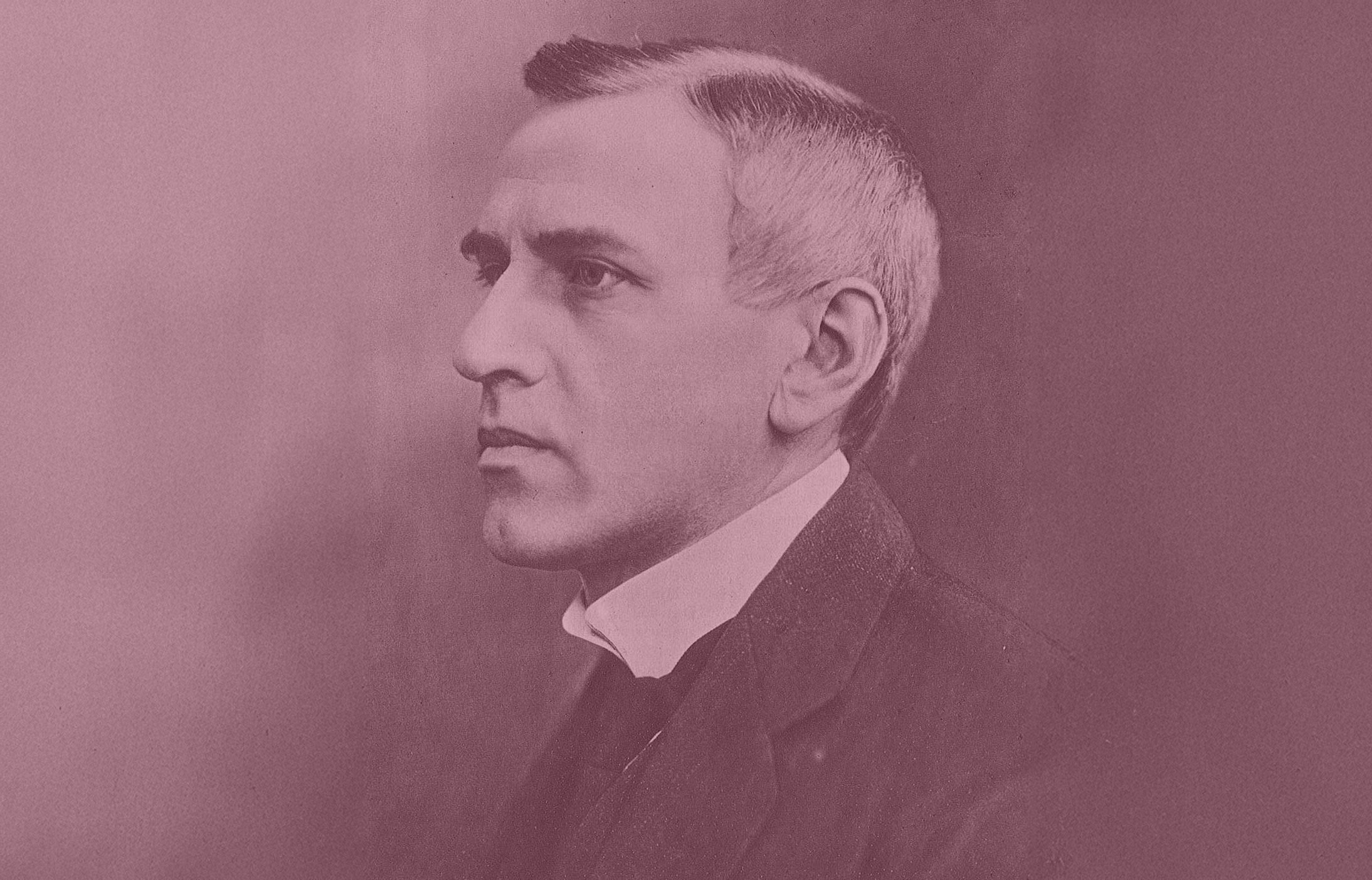
Charles Silver [1868-1949] Russian in origin and the son of a commercial traveller, he was born in Paris and had to apply for French naturalisation before being allowed to enter the Prix de Rome for musical composition. He had enrolled in the Paris Conservatoire in 1886, studying under Théodore Dubois for harmony and Jules Massenet for composition, winning the Premier Prix de Rome in 1891 with his cantata L’Interdit, after becoming a French citizen in 1889. Apart from the works he wrote at the Villa Medici [an overture entitled Bérénice that was to be performed at the Institut in 1895 and the opera La Belle au bois dormant which was not premiered until 1902, in Marseille], his first opus numbers were mélodies and patriotic songs [including En avant! to a text by Paul Déroulède]. He nevertheless managed to carve out a niche for himself in the leading Parisian concert programmes with several works premiered at the turn of the century: Rapsodie sicilienne [Concerts Lamoureux, 1899] and Poème carnavalesque [Monaco, 1906, composed at the Villa Medici]. Married to the singer Georgette Bréjean [a popular interpreter of Massenet’s Manon at the end of the 1890s], Silver also devoted himself to writing lyric works: Le Clos [premiered in 1907 at the Opéra-Comique]; Neigilde [a ballet with singing premiered in Monte Carlo in 1909]; Myriane [a drame lyrique premiered in Nice in 1913]; La Mégère apprivoisée [premiered at the Paris Opéra in 1922]; and finally La Grand-Mère [1930] and Quatre-Vingt-Treize [1936]. Appointed professor of harmony at the Paris Conservatoire in 1919 after the death of Lavignac, he was made a Chevalier of the Légion d’honneur in 1926.

Bru Zane

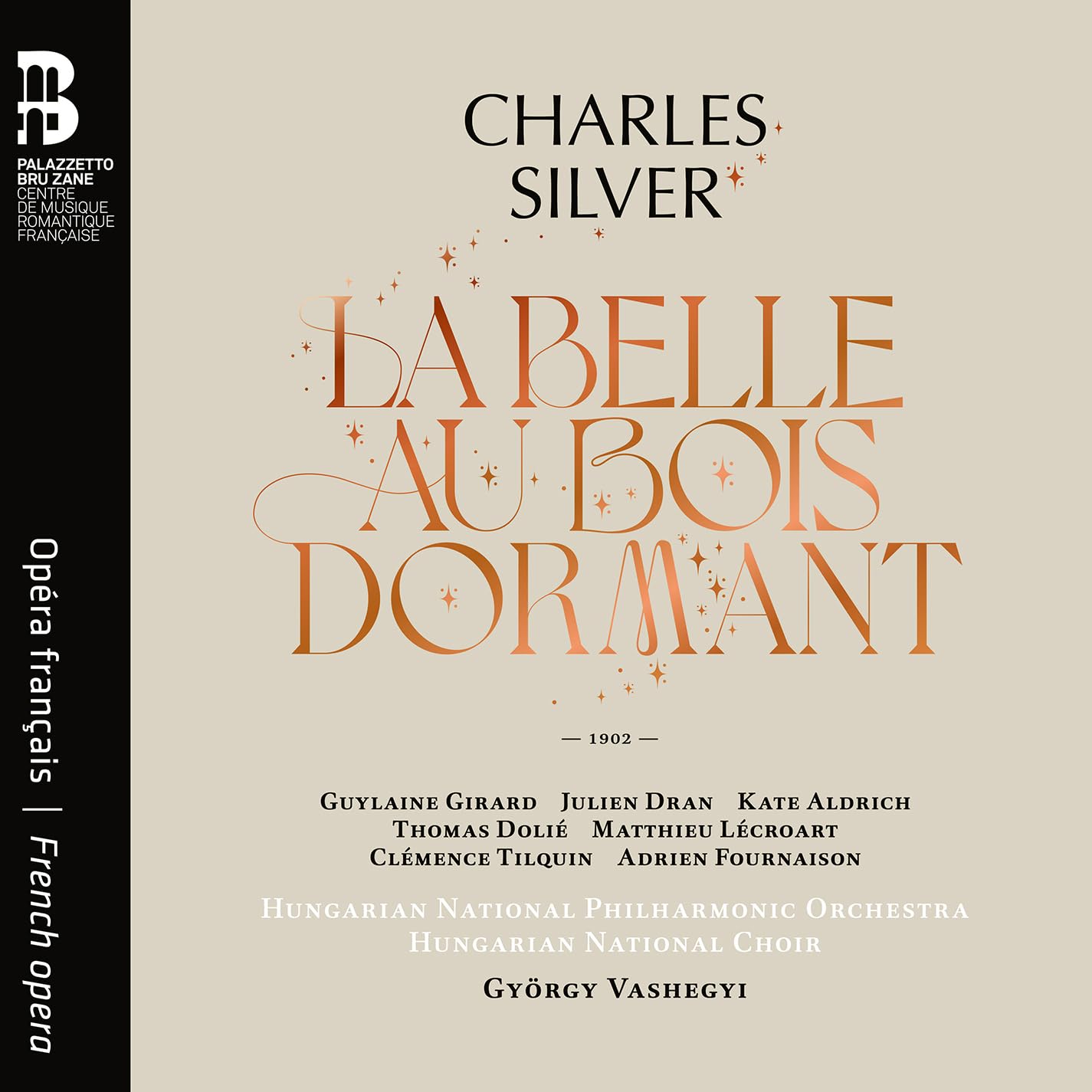
La Belle au bois dormant, féerie lyrique en cuatro actos y nueve escenas [1895]. Ce rustaud est l’instrument.

Imagen

Myriane, drame lyrique en tres actos [1913]. Seul, ai-je dit.

Imagen

_________________
Imagen


Arriba
 Perfil  
 
 Asunto: Re: La otra ópera
NotaPublicado: 24 Abr 2026 14:35 
Desconectado
Div@
Div@
Avatar de Usuario

Registrado: 14 Mar 2011 22:55
Mensajes: 2759
Ubicación: Nibelheim (obviamente)
Zelenka escribió:
Imagen

Charles Silver [1868-1949] Russian in origin and the son of a commercial traveller, he was born in Paris and had to apply for French naturalisation before being allowed to enter the Prix de Rome for musical composition. He had enrolled in the Paris Conservatoire in 1886, studying under Théodore Dubois for harmony and Jules Massenet for composition, winning the Premier Prix de Rome in 1891 with his cantata L’Interdit, after becoming a French citizen in 1889. Apart from the works he wrote at the Villa Medici [an overture entitled Bérénice that was to be performed at the Institut in 1895 and the opera La Belle au bois dormant which was not premiered until 1902, in Marseille], his first opus numbers were mélodies and patriotic songs [including En avant! to a text by Paul Déroulède]. He nevertheless managed to carve out a niche for himself in the leading Parisian concert programmes with several works premiered at the turn of the century: Rapsodie sicilienne [Concerts Lamoureux, 1899] and Poème carnavalesque [Monaco, 1906, composed at the Villa Medici]. Married to the singer Georgette Bréjean [a popular interpreter of Massenet’s Manon at the end of the 1890s], Silver also devoted himself to writing lyric works: Le Clos [premiered in 1907 at the Opéra-Comique]; Neigilde [a ballet with singing premiered in Monte Carlo in 1909]; Myriane [a drame lyrique premiered in Nice in 1913]; La Mégère apprivoisée [premiered at the Paris Opéra in 1922]; and finally La Grand-Mère [1930] and Quatre-Vingt-Treize [1936]. Appointed professor of harmony at the Paris Conservatoire in 1919 after the death of Lavignac, he was made a Chevalier of the Légion d’honneur in 1926.

Bru Zane

La Belle au bois dormant, féerie lyrique en cuatro actos y nueve escenas [1895]. Ce rustaud est l’instrument.

Imagen

Myriane, drame lyrique en tres actos [1913]. Seul, ai-je dit.

Imagen

Acaba de salir a la venta (me ha llegado el aviso de Bru Zane). ¡Pero menudo precio. (aunque el pack incluya un hermoso libro..!).

_________________
"Tornate all'antico e sarà un progresso" (Giuseppe Verdi, compositor y genio).

Esto y otras muchas cosas más en Desde el Nibelheim


Arriba
 Perfil  
 
Mostrar mensajes previos:  Ordenar por  
Nuevo tema Responder al tema  [ 1636 mensajes ]  Ir a página Anterior  1 ... 104, 105, 106, 107, 108, 109, 110  Siguiente

Todos los horarios son UTC + 1 hora [ DST ]


¿Quién está conectado?

Usuarios navegando por este Foro: Google [Bot] y 54 invitados


No puede abrir nuevos temas en este Foro
No puede responder a temas en este Foro
No puede editar sus mensajes en este Foro
No puede borrar sus mensajes en este Foro


Powered by phpBB © 2000, 2002, 2005, 2007 phpBB Group
Traducción al español por Huan Manwë para phpbb-es.com